How to “Do” GEO Optimization in 4 Phases Across Your Locations
Discover AthenaHQ and Uberall’s step-by-step maturity model for using GEO data to understand, influence, and scale brand visibility across AI-driven search experiences.



If you’re a CMO or executive of an enterprise brand, you’ve probably felt the insecurity: AI search is influencing customer purchasing decisions — but you don’t yet fully understand how to influence AI’s recommendations — or how to track it for that matter.
You’re being told that if you’re not visible to AI, you’ve already lost — but you’re concerned by inconsistent brand recommendations in AI, and it’s hard to know if your brand is actually being regularly mentioned or cited — or if your competitors are winning instead.
What is playing in the back of your mind, though, is that some brands have already claimed success through Generative Engine Optimization (GEO) in this new search era … you’re just not 100% sure how they got there.
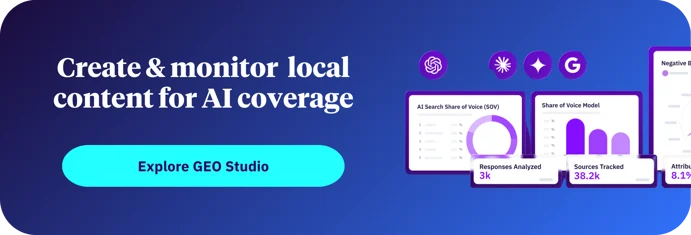
Built for multi-location brands, GEO Studio transforms the murkiness of AI visibility into actionable business intelligence. This AI Search Maturity Model discussed in this Search Engine Journal webinar with Uberall and AthenaHQ gives your team a clear framework on how to turn insights from GEO Studio into impact — and how to break it down into 4 phases over the coming weeks.
1. Figure Out Where You Stand
When: Weeks 1–6
Start by aligning stakeholders across marketing, ops, and local teams on the business problem. What exactly do you want to achieve across your locations — customer awareness, conversion, brand authority (or all of the above)?
It helps to understand what you’re up against. When AI answers a query, it isn’t pulling from one source; it blends between 10 and 16 sources before forming a response. It’s triangulating, comparing, and validating across all of them. That means credibility isn’t built in one place; it’s earned consistently across many. This is why establishing a clear baseline before taking any action is so important. Without it, you’re optimizing in the dark.
Establish clear KPIs upfront. For multi-location brands, this will typically include:
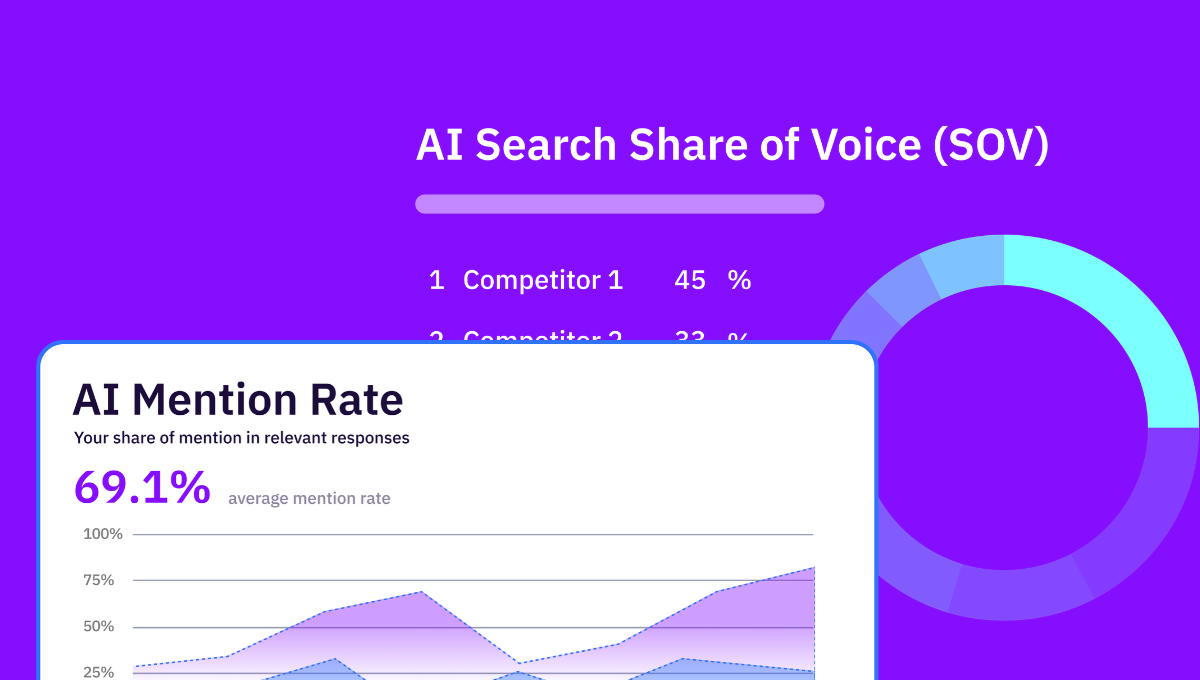
- Mention Rate: How often your brand appears in AI-generated answers
- Citation Rate: How frequently AI systems reference your content as a trusted source
- Share of Voice: Your brand’s presence compared to local competitors
These GEO metrics provide the foundation for tracking progress and demonstrating ROI to leadership.
Once you’ve clarified and defined these, prioritize the most promising AI prompt opportunities across your locations. These are the prompts with the highest volume and value in your Prompt Center and could therefore have the greatest impact if you’re surfaced correctly and consistently.
This early clarification helps your teams focus on what matters most for the business and prevents wasted effort focusing on low-impact opportunities. Because from this step on, every action you take with GEO Studio — from content creation to monitoring AI visibility — has purpose and measurable impact.
Next, and before you succumb to the pressure of publishing more and more content in hopes of greater search performance, audit your current performance.
What content is showing up in AI responses? Which of your locations is showing up? Which AI models are recommending you?
Use GEO Studio’s Olympus to capture citations, mentions, benchmarks, and opportunities so you know your starting point. This step turns that initial uncertainty into a solid understanding and self-awareness from which you can only build positively.
This stage includes identifying content that’s thin, outdated, or not structured in a way that AI systems can easily surface.
You’ll understand better what you need to do to outperform your competitors for the prompts that move the needle, which is critical for the strategy SEOs and CMOs build with their teams.
2. Address Your Content Gaps
When: Weeks 6–12
This is where your multi-location content moves from generic to strategic, and where you can differentiate the most.
LLMs don’t just pull from your website. As we covered earlier, they blend between 10 and 16 sources before answering a question, cross-referencing and validating across on-page and off-page signals. That means your content strategy has to think in two directions at once.
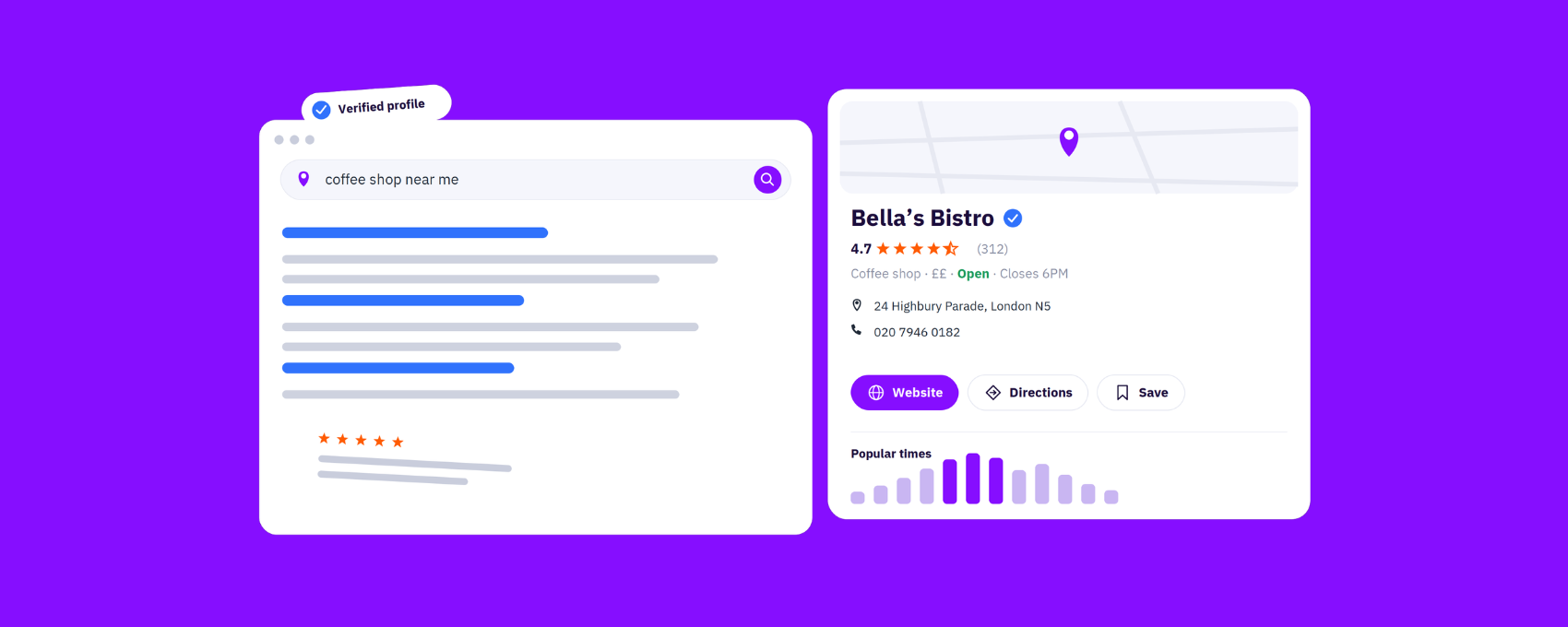
On-page, that means FAQs, local pages, and location-specific answers to real prompts — not just generic brand messaging. If you’re a pharmacy open late in a specific neighborhood, put that in your FAQs. If your clinic offers early check-in or vegan options, make sure it’s written somewhere. Your content needs to map to the prompts patients and customers are actually asking.
Off-page is where a less obvious opportunity lives: what Andrew Yan, CEO of AthenaHQ, calls the “long-tail website renaissance.” AI search pulls from 20 to 40 different websites — far beyond the Forbes and Wall Street Journals of the world. Long-tail sites that competitors have overlooked are often having an outsized influence on AI recommendations, and because no one else is targeting them, they represent high-ROI, low-competition placement opportunities. The strategic move is to reverse-engineer which sites AI is pulling from for your key prompts and make sure your brand is mentioned — positively and accurately — on those pages.
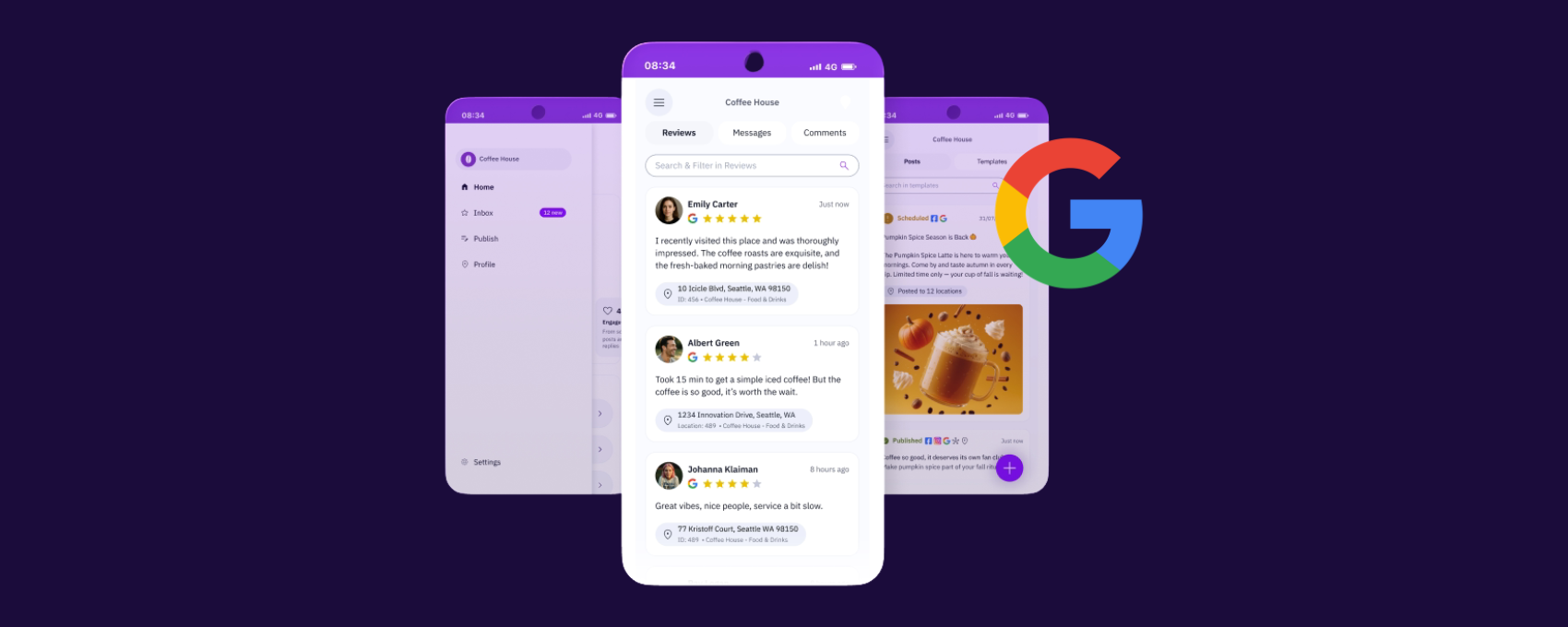
Which content formats perform best? Structured listicles and comprehensive FAQ pages tend to earn the most citations from AI models. Reddit is also a highly influential source for several AI platforms, making authentic participation in relevant communities a genuinely useful tactic — not just a nice-to-have.
On the question of how to create this content efficiently: AI-drafted, human-reviewed is the recommended approach. Purely AI-generated content risks being flagged as low quality, and in regulated sectors like healthcare or financial services, heavier human review is essential — not optional. The right blend is using AI to draft and speed up production, with humans ensuring accuracy, brand consistency, and compliance before anything goes live.
The query fan out feature in GEO Studio will inspire you to go into greater depth with your content so that you maximize your AI visibility and cover the specific questions your customers are asking. Creating content with precision and focus is how multi-location businesses will thrive in AI search.
Now the plan leaves the group chat, figuratively, of course.
GEO Studio’s Action Center helps your teams move from strategy to implementation efficiently and systematically, by creating new content to fill identified gaps or updating existing content that is optimized for every search journey.
3. Measure Your Moves
When: Weeks 12–16
With GEO Studio, you can monitor your locations’ Mention Rate, Citation Rate, and Share of Voice across AI platforms.
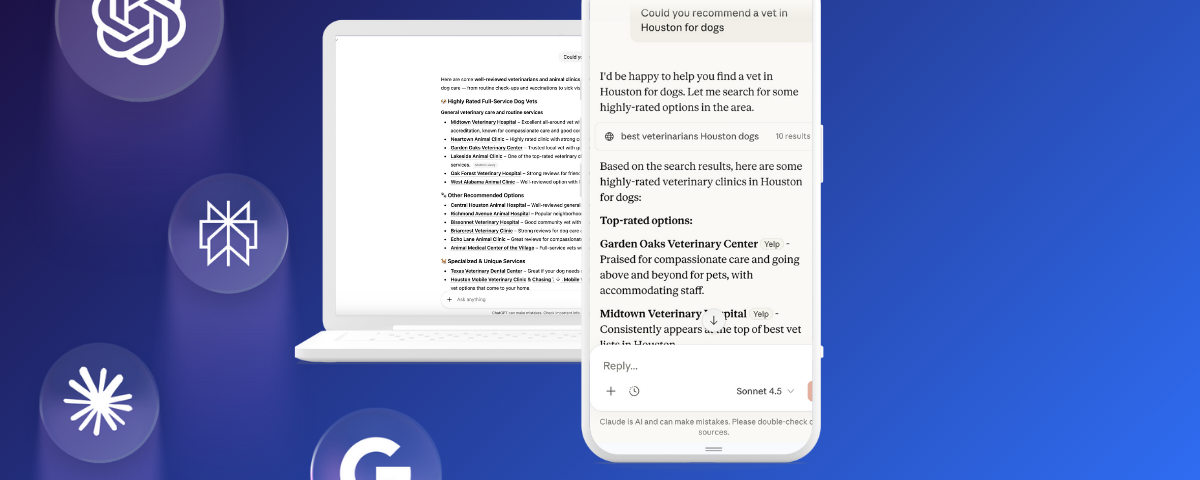
But before diving into the numbers, it’s worth understanding something fundamental about how AI search works: it’s probabilistic. Ask the same question to ChatGPT or Gemini ten times and you’ll get ten different answers. That means your metrics will fluctuate — and that’s not cause for concern. The right way to read GEO performance is by tracking the overall trend over weeks or months, not reacting to day-to-day movement.
Analyze what’s working, iterate through testing, and optimize continuously. Come back to the goals you set at Phase 1 and gauge how far you’ve come after a few months. You can also check Sentiment & Positioning: how is your brand described when mentioned? Are you positioned as premium, affordable, family-friendly, innovative? AI-generated descriptions of your brand or location shape perception before customers ever visit.
One metric worth watching closely is the quality of traffic arriving from AI platforms. Visitors from AI models tend to have higher conversion rates, lower bounce rates, and higher intent than visitors from traditional search — because by the time they reach your site, they’ve already done their research and made a preliminary decision. That’s the downstream reward for getting your AI visibility right: not just more mentions, but better-qualified traffic that converts.
And this is essentially how you complete another audit. It’s this cycle that gives execs and marketers the confidence that every dollar invested in AI visibility is driving measurable results.
4. Learn and Scale (16+ Weeks)
When: Weeks 16+
Use the insights from the past 16 weeks to:
- Identify what's working: Which content types, structures, or topics consistently earn citations and mentions? Replicate success.
- Spot underperformance: Where are gaps widening? Which locations lag behind? Why?
- Run controlled tests: Test different content approaches, formats, or messaging to see what AI systems prefer.
- Adjust strategy in real time: AI search evolves quickly. Regular monitoring lets you adapt before visibility fizzles out.
Expand into new journeys, channels, markets, or capabilities, using a repeatable workflow that keeps your multi-location brand ahead of the competition.
Maximize Your AI Maturity Faster Than Competitors
Success in AI search isn’t a one-time achievement. The brands that have already seen early success have most likely experienced continuous learning and iteration. Much like traditional SEO.
The framework is clear: start with a clean, consistent source of truth across all your data; engineer the right context through on-page and off-page signals; and orchestrate your team and tech to scale it. Brands doing this well are already seeing citations double within 2 months, Share of Voice grow by 10% or more, and conversion rates from AI-driven traffic running 3 to 9 times higher than traditional channels.
Without actionable data, it’s easy to guess — and assume your authority. GEO Studio equips multi-location brands with the visibility, insight, and control they need to confidently understand AI-driven customer decisions and successfully capture demand across their locations.
The brands that are already winning aren’t the ones with the biggest budgets. They have the clearest strategy, the best actionable data, and the fastest learning cycles on how to “do” GEO optimization.


1,800 brands trust us to stay visible
— not just show up once or twice in local search.


.png)

Frequently asked questions
A repeatable GEO workflow runs in four phases: Establish a visibility baseline and KPIs, close on-page and off-page content gaps, measure Mention Rate, Citation Rate, and Share of Voice, then scale what works across locations. The cycle mirrors SEO, in that you audit, optimize, measure, iterate, but the GEO workflow rewards different tactics. AI engines favor citations, statistics, and structured answers over keywords alone. Tools like GEO Studio turn each phase into concrete actions, so teams optimize from data rather than guesswork.
You evaluate your GEO maturity by identifying which of the four phases your team has reached: Phase 1, setting a visibility baseline and KPIs; Phase 2, filling content gaps (adding on-page FAQs and location-specific pages, plus earning mentions on the third-party sites AI cites); Phase 3, measuring Mention Rate, Citation Rate, and Share of Voice; and Phase 4, testing and scaling across locations. Most brands start with Phase 1; our Location Performance Maturity Assessment shows where you stand.
A GEO implementation checklist should include four stages: Align stakeholders on goals and KPIs (Mention Rate, Citation Rate, Share of Voice); audit which content, locations, and AI models currently surface your brand; fill on-page gaps like FAQs and local pages plus off-page mentions on the sites AI actually cites; and monitor trends over weeks, not days. The four-phase framework above walks through each step, and the GEO Playbook covers the multi-location version.
You audit your current AI visibility by capturing a baseline before optimizing anything. Teams need to know which content shows up in AI responses, which of your locations appear, and which AI models recommend you. Flag pages that are thin, outdated, or hard for AI systems to pull information from, and benchmark against competitors on your highest-value prompts. GEO Studio’s Olympus captures citations, mentions, and benchmarks in one place.
GEO optimization typically shows measurable results within a few months rather than weeks. Following a phased approach, teams should aim to spend weeks 1 to 6 on baselines, weeks 6 to 12 on content, and weeks 12 to 16 measuring movement. Brands executing well often see citations double within 2 months and Share of Voice grow10% or more. Because AI outputs are probabilistic, read your GEO metrics as trends over weeks or months, not day-to-day swings.
You don’t need a separate GEO strategy for each AI platform, but you should monitor them individually. Every model blends multiple sources and weighs them differently — Reddit, for example, has been highly influential for several AI platforms — and the same question can return different answers each time it’s asked. Build one consistent foundation of accurate location data and structured content, then track Mention Rate and Citation Rate per model to see where you'’e strong and where gaps remain.
Multi-location brands should look for a GEO platform that covers the full workflow: prompt-level visibility monitoring across AI models, Mention Rate, Citation Rate, and Share of Voice tracking per location, sentiment and positioning analysis, and a way to turn insights into content actions. GEO Studio pairs these with features like query fan-out and an Action Center, so teams move from unclear AI visibility to measurable impact across every location.
GEO ownership in a multi-location organization is shared: SEOs and CMOs typically build the strategy, while marketing, operations, and local teams align on goals and execute across locations. What matters most is agreeing upfront on the business problem — awareness, conversion, or brand authority — and the KPIs that prove ROI to leadership. Clear ownership of that framework keeps every action purposeful instead of scattered across teams.