Multi-Location Teams Are "Babysitting" Their AI Marketing Assistants and Now They Have More Work Than Before
AI marketing assistants were built for one location, one task at a time. Here’s why multi-location brands need an AI agent that works without being prompted — and how UB-I delivers that.
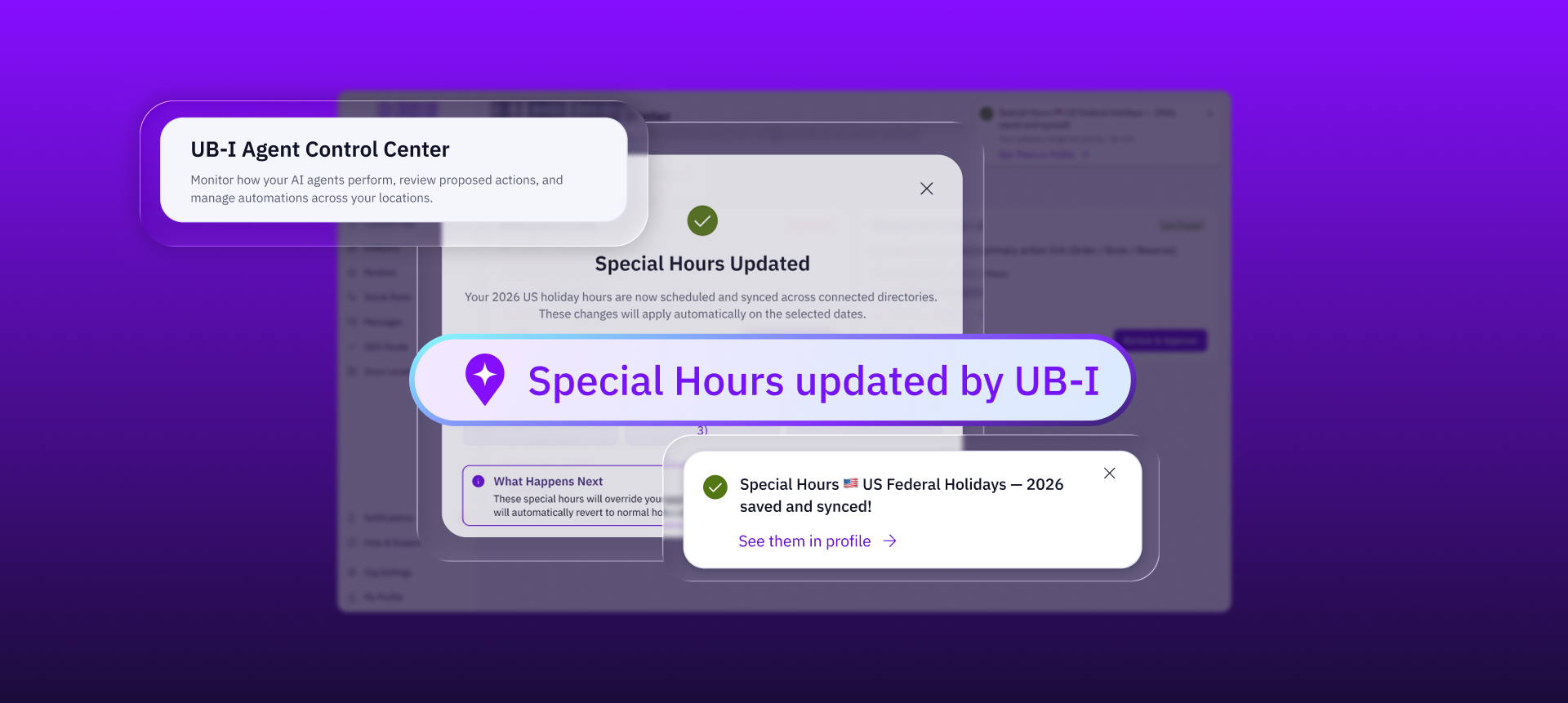

- AI marketing assistants help individual marketers work faster, but they still wait for a human to prompt, brief, and approve every action — and at multi-location scale, that creates more work, not less
- The market is splitting into two camps: platforms shipping a dozen specialized AI agents you have to coordinate, and platforms shipping one agent that monitors, prioritizes, and acts across every location from a single interface
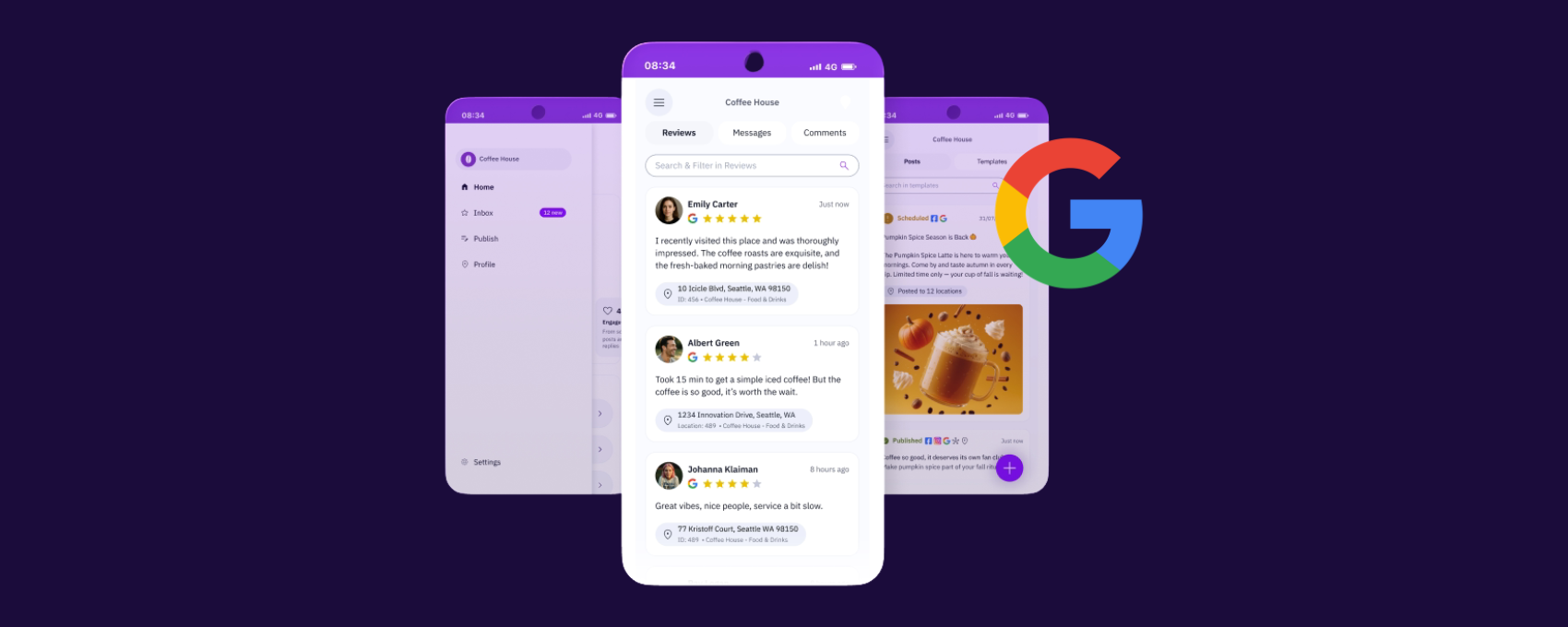
- UB-I is Uberall’s AI agent for location performance — an ambient agent that continuously watches every location, decides what matters most, and prepares the work for you to approve, without being prompted
- The difference between an assistant and an agent shows up in your calendar: an assistant saves time on tasks you already knew about; an agent finds the tasks you didn’t know were costing you revenue

You don’t have to dive into the depths of the internet to find disheartened deserters from the AI adoption camp writing about all the hours they’ve spent setting up AI marketing assistants that saved them maybe 45 minutes before breaking … and then uninstalled them.
So much hope rides on the productivity that AI assistants promise, but in reality many deliver more chaos and undone work for overwhelmed marketing teams. I mean, working with multiple assistants in isolation means you have to keep track of multiple chat windows in isolation, and each is really like a new inbox, with updates flying in.
I’ve spoken to a lot of enterprise prospects and clients managing multiple locations who are interested in leveraging AI for marketing operations. Again, it doesn’t take a DMC to hear the same frustrations: They bought a platform that promised AI-powered review responses, automated sync, smarter workflows — and months later, they’re still stuck on the basics. The AI features they were sold are sitting untouched because they weren’t effective enough at scale.
These brands are spending more, managing more, and when leadership asks what the platform has actually done for the business, nobody has a convincing answer. They bought an AI marketing assistant that works fine for a few locations, but they’re running hundreds. And now they’re assisting the assistant.
This major pain point has been on my mind and regularly made me ask myself: What if AI didn’t need assisting — or babysitting? Uberall has got to be the one to make that happen for our clients.
The Assistant Model Hits a Wall Exactly When You Need It Most
Let’s give AI marketing assistants some appreciation. Drafting a review response is faster with them. Writing a social caption is also faster. Generating a location description is definitely faster. That’s why Uberall also offers these AI capabilities with AI Review Responses, AI Bulk Replies, and AI Social Writer. They really are game-changers for a range of our clients.
It’s impressive when you’re in the early stages of adopting that assistant, but then you realize that it’s still not helping you really scale your activities beyond 50 locations.
Imagine: By day 8 of using that tool, you would have written more than 1,000 prompts for just those three use cases I listed above.
With an AI marketing assistant that doesn’t work autonomously, every one of those tasks still starts with you. You open the tool; you type a prompt; you review the output; you click “publish.”
I’m not just talking to teams who’ve outgrown these AI marketing assistants (or perhaps invested in ones that they’re not happy with); I’m also talking to those trekking up that manual location management mountain, for example. You wouldn’t believe some of the stories prospects have been sharing with me.
One prospect managing 300 locations told me their marketing lead was spending a full day every two weeks just going through listings — not optimizing, not strategizing, just making sure the basics were right.
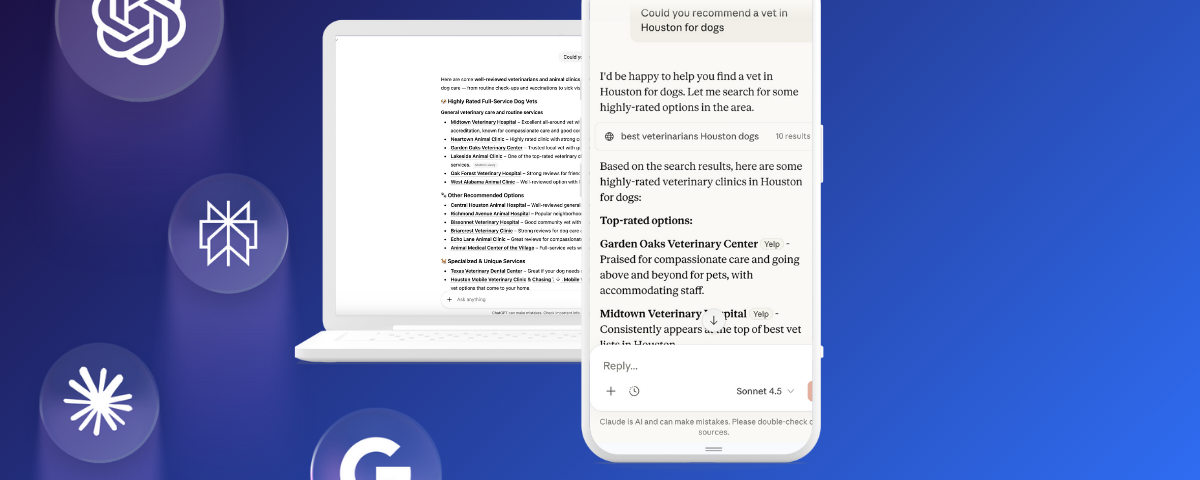
And rightfully so. AI search engines — ChatGPT, Perplexity, Google AI Mode and Overviews — are reading location data, such as hours, attributes, reviews, and deciding which local businesses to recommend based on that structured data.
If that marketing lead were using an AI marketing assistant to check for data inconsistencies, overwrites, or errors, there would still be a level of proactiveness and a certain amount of time required to take on that “prompt parent” role. The role of “babysitting” the assistant to check and provide feedback on listings, waiting for it to tell them what’s wrong and what needs fixing.
If they’re not prompting their AI assistant to check their location data is clean, it wouldn’t tell them. They’d be none the wiser.
So the more locations a brand working with an AI assistant has, the greater the risk of not catching errors, not fixing them fast enough, or letting the ball drop elsewhere because the prompt parent role is consumed by just fixing and checking business listings.
What multi-location brands actually need is something that sees the problem, drafts a fix based on your previous approvals, and sends them to you. It doesn’t just diagnose; it does the thing and makes sure you’re happy with it.
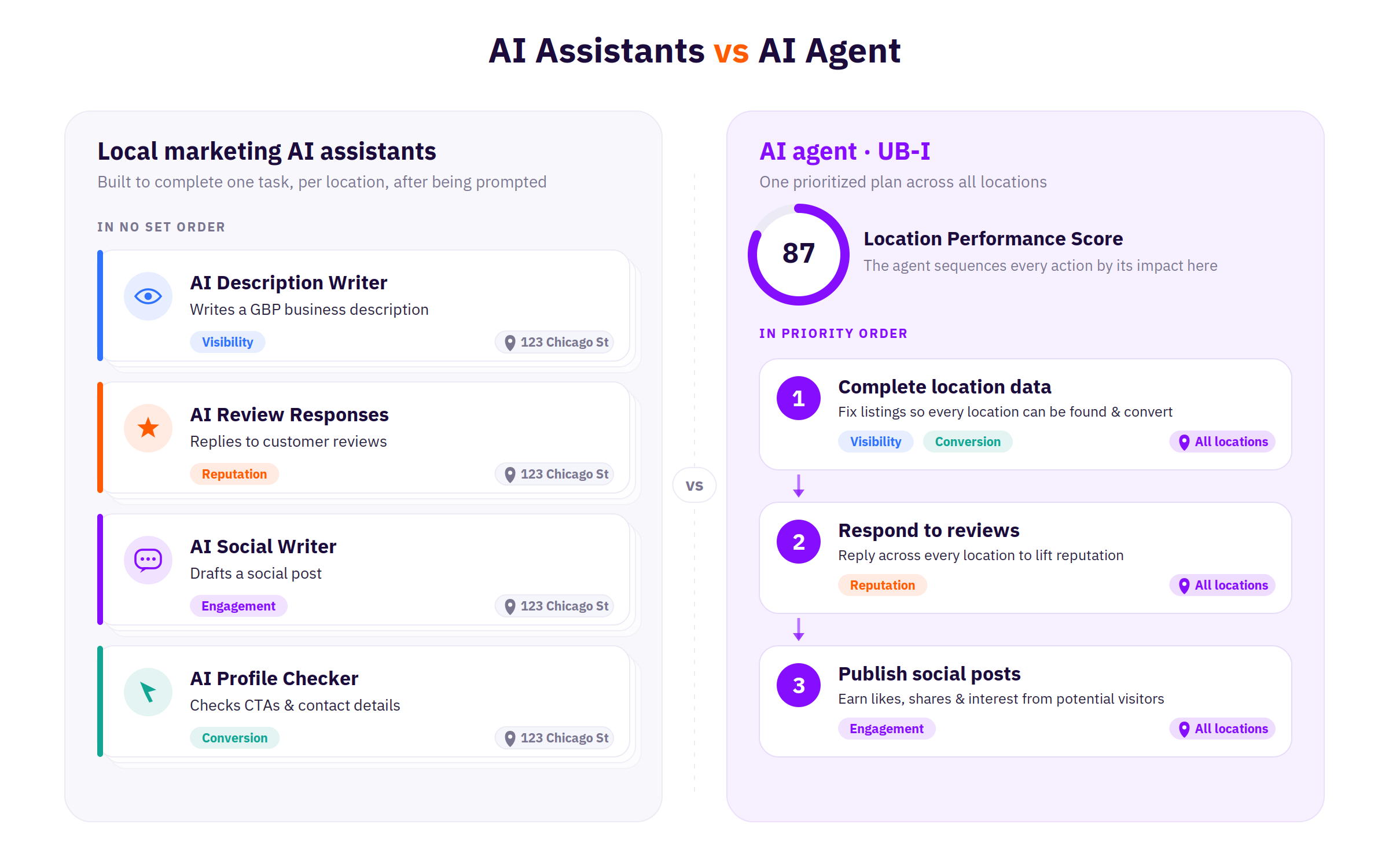
For me, this is the difference between AI marketing assistants and AI agents. Assistants are good at improving the individual pillars of what we call Location Performance Optimization (LPO):
- Visibility: generating a business description for GBP
- Reputation: writing review responses
- Engagement: drafting a social post
- Conversion: checking for contact details and CTAs in GBP
But UB-I, as an AI agent, operates at the LPO level, meaning it connects all those isolated pillars to influence overall how online actions translate into on-location business impact. It prioritizes every action by its impact on your Location Performance Score, so your team is approving the most critical edits first, not in the order UB-I was finished with them.
More Assistants Is Not the Solution; They’re a Start
Let me be clear: There’s nothing wrong with AI-assisted marketing features. Our platform includes them too. They’re useful, and for a business managing a handful of locations, they are probably all you need from a capability and cost perspective.
But for enterprise brands running hundreds or thousands of locations, with overwhelmed teams, those features are the minimum martech stack addition. And those assistants might even get paid for and underutilized as a result.
The goal for these enterprise brands isn’t to draft a review response with AI for one of their 500 locations. It’s whether their AI knows which of their 500 locations has unanswered complaints that are going to negatively affect sentiment signals and therefore reputation according to both customers and AI systems. And obviously to fix that before it affects a location’s performance.
Our Product Marketing Manager Pat put it bluntly in a webinar we hosted last month: “A lot of what the market calls ‘agents’ right now are just rebranded chatbots.” I know that sounds harsh, but I’ve seen enough demos to agree. If your “agent” still needs you to configure it, prompt it, and sign off on every output before anything happens — that’s not an agent. That’s an assistant posing as an agent.
We built UB-I to be far more helpful than that. It’s not a replacement for AI-assisted marketing features (those still do their job), but the thing — the one agent — that monitors, prioritizes, and orchestrates across everything at once from one place where every location’s needs are visible, ranked by impact, and ready to approve.
Murilo, our product manager behind UB-I, explains it with a metaphor I keep stealing for my own conversations. Imagine you have a team of specialists — one for reviews, one for social, one for listings. When that team grows too big, you don’t hire more specialists. You hire a lead. One person who holds the context of everything and gives you a single point of contact. That’s what UB-I is.
UB-I scans for opportunities across a brand’s online footprint, monitoring listings, reviews, and profiles around the clock, works out what’s dragging performance down, fixes what falls inside the rules teams have set, checks that the fix actually worked, and escalates the rest to a human.
That equation of 1,000+ individual prompts across 50 locations over 8 days turns into maybe three approvals with UB-I (per fix) — and the work is done across every relevant location in under an hour.
Pat has described the shift to customers like this: Your to-do list becomes a to-approve list. UB-I does the work and individual humans decide what goes live.
Updating Opening Hours
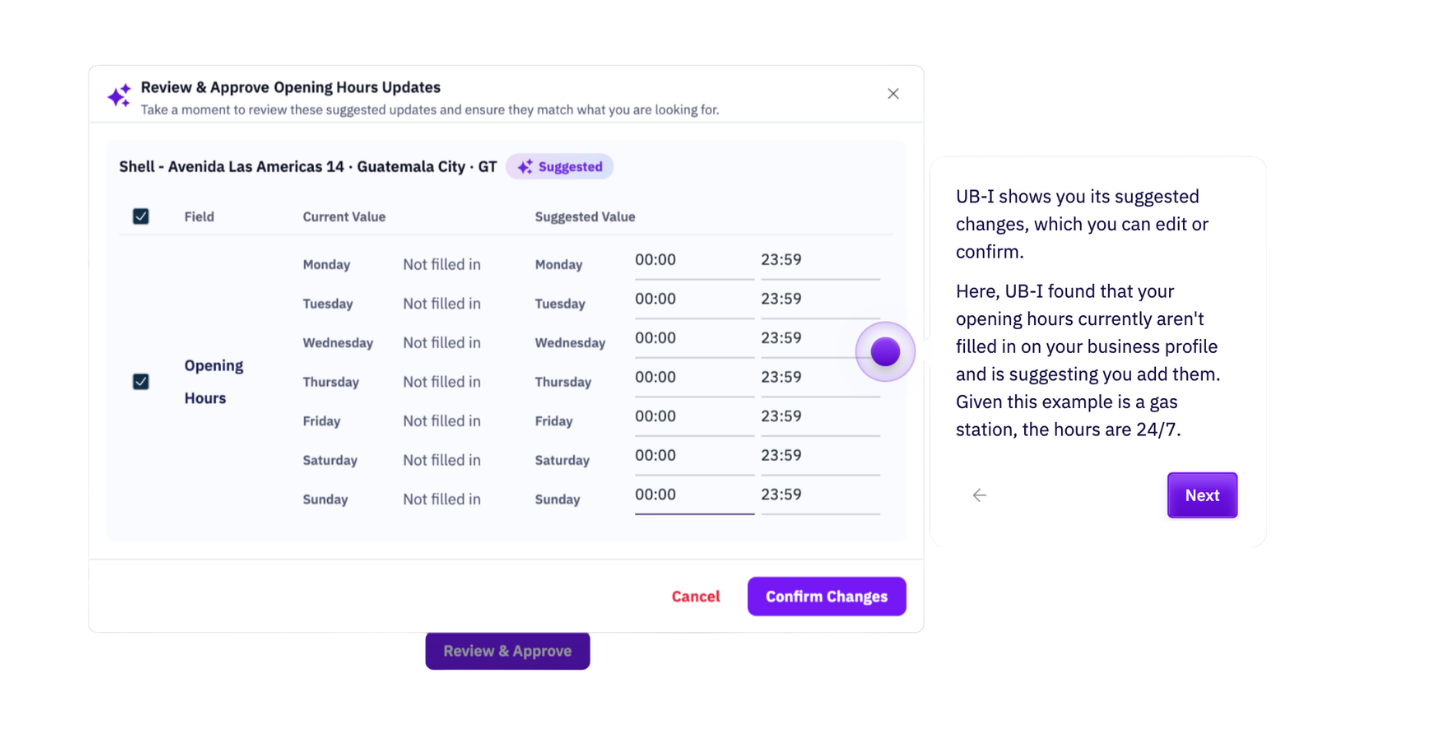
Say three of your branches are still showing prerenovation hours — closed at 5 p.m. when they actually stay open until 6:30. No one on your team has noticed because who’s manually checking opening hours across every platform for every location?
UB-I catches it, corrects the hours everywhere at once, confirms the update actually went through, and moves on to the next thing.
Optimizing GBP Attributes
Or take something less obvious: A customer asks ChatGPT for a dog-friendly café with decent WiFi near their office. Your café is better, but those two attribute fields are blank, so the AI tool can’t confirm them, and you don’t get mentioned or recommended.
UB-I audits attribute completeness across your whole estate, finds the locations with opportunities like these, fills what it can pull from your source systems, and routes the rest to local managers with a deadline.
Writing Brand-Approved Review Responses
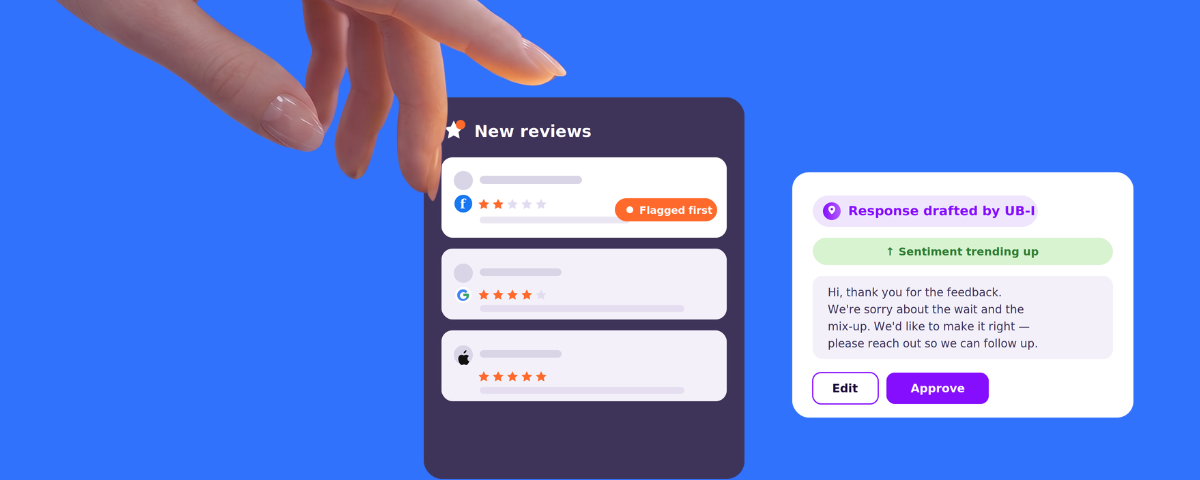
And reviews — the five-star thank-yous, the standard “great experience” feedback — UB-I handles those on its own, using the templates and tone of voice you’ve already set up, so they go out sounding like your brand, without someone spending their Tuesday morning copying and pasting the same three sentences. We genuinely spoke to a prospect who was doing this.
It drafts a response and routes it to a human before anything goes live for the reviews containing a specific complaint, suggestion, or an issue that could escalate.
Either way, no review just sits there unanswered.
I keep coming back to this, and it’s almost disappointing how simple it is. The least glamorous thing any of us own — those plain rows of opening hours and attributes — are the thing the machines trust most. The structured things.
An AI search engine cares whether it can confirm you’re open on Sunday, whether you take contactless payment, and whether your last 90 days of reviews suggest someone will actually have a good time.
So Hire Your Lead — As Pat Would Say
A team of five can handle the presence of five thousand locations without clicking fifty thousand buttons on a dashboard with an AI agent like UB-I. A tool built for more than assisting AI assistants with thousands of prompts a week. It stays installed because it helps smart people scale their local marketing beyond chat windows.
UB-I is getting more powerful. Pat and Murilo are demonstrating that firsthand through our Live Sessions for clients, in which we’re showcasing every new use case UB-I can handle.
Which means I’m no longer obsessing over whether there’s a world where AI doesn’t need assisting. I’m obsessing over getting our clients to explore UB-I for themselves — so they can stop manually checking 300 listings every fortnight, copying and pasting the same generic review responses, and bulk-uploading holiday hours three weeks before Christmas hoping nothing breaks.



1,800 brands trust us to stay visible
— not just show up once or twice in local search.


.png)
