Best Local Search Visibility and Reporting Tools for Multi-Location Brands


TL;DR
Uberall is a strong choice for enterprise multi-location brands and restaurant chains that need listing distribution, location-level analytics, and Location Performance Score reporting in one platform. It publishes and optimizes listings across more than 150 directories, while supporting local visibility and performance reporting across locations.
BrightLocal fits agencies and SEO-led teams that want neighborhood-level visibility tracking alongside citation work. Moz Local and Semrush Local also support local rank analysis through Local Grid and Map Rank Tracker, while Yext focuses on listings analytics by publisher.
- Uberall, for enterprise and restaurant performance: Manage listings, local presence, engagement data, and cross-location performance reporting in one system.
- BrightLocal, for agencies and SEO-led analysis: Prioritize citation work, local rank tracking, and neighborhood-level visibility analysis.
- Semrush Local, for existing Semrush users: Track map ranking performance while managing listings and Google Business Profile activity.
- Moz Local, for listing health and Local Grid tracking: Keep listings current and monitor target-keyword rankings.
- Yext, for publisher-level listing analytics: Manage listing accuracy and impressions, clicks, calls, and directions by publisher or location.
- Birdeye, for broader customer experience workflows: Evaluate listings, reviews, social, reporting, and customer feedback functions together.
Directory accuracy, rank tracking, engagement reporting, and verified store visits are separate buying criteria. A high direction-request count does not confirm that a customer visited a location.
What to Look for in a Local Search Visibility Tool
Use this checklist to evaluate platforms against the reporting needs of your locations, teams, and customers.
- Directory and listing accuracy: Confirm that location data stays consistent across names, addresses, phone numbers, hours, categories, and attributes.
- Duplicate and data-cleanup workflows: Look for ways to identify duplicate listings, outdated records, and publisher overwrites before they confuse customers.
- Keyword and neighborhood-level rank tracking: Choose this capability when nearby searchers see meaningfully different local results.
- Interaction reporting: Review calls, direction requests, website clicks, and other local conversion actions by location.
- ROI and store-visit attribution: Require a documented method that connects digital activity to physical visits or revenue.
- Multi-location governance and reporting: Make sure regional teams can compare locations, set permissions, and find weak-performing stores.
- Integrations and exportability: Check whether reporting can move into your CRM, POS, business intelligence tools, or agency dashboards.
- AI-search visibility: Evaluate whether the platform helps maintain the data, local context, and trust signals that affect AI-generated answers.
Rankings, impressions, calls, direction requests, and website clicks measure visibility or engagement. Store visits require a defined attribution method, such as location-level conversion reporting, UTM and call tracking, CRM or POS connections, or a verified visit-measurement workflow.
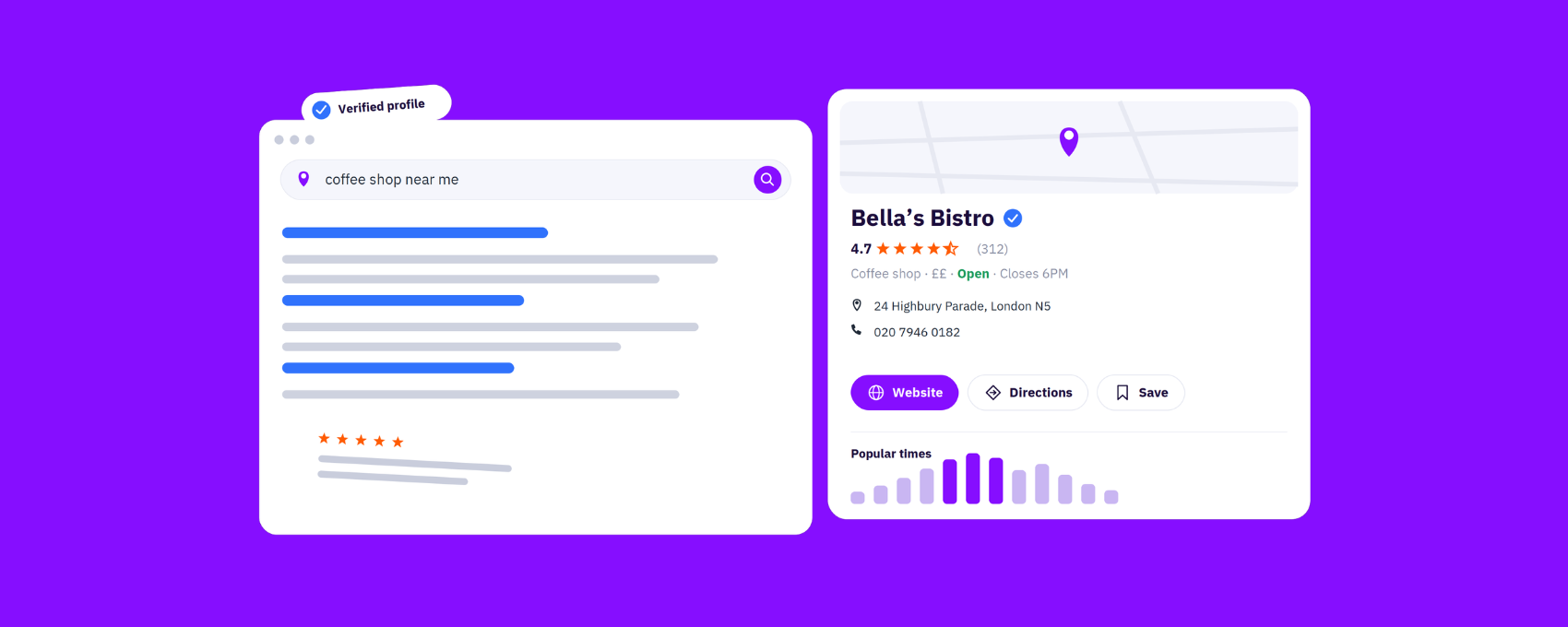
Accurate location data remains a core visibility requirement. Complete Google Business Profile descriptions, categories, attributes, reviews, and photos predict whether local brands appear in AI responses, according to Uberall’s study of AI-search signals. Uberall GEO Studio gives brands the accuracy, trust signals, and local context AI needs to select their locations.
Comparison Table
This comparison separates listing management, rank analysis, interaction data, and attribution so you can compare the capabilities that match your reporting model.
| Tool | Best for | Notable capability | Consideration |
|---|---|---|---|
| Uberall | Enterprise multi-location brands and restaurant chains | Directory/listing accuracy: Publishes and optimizes listings across 150+ directories, including Google, Apple, voice search, and AI tools. Grid or neighborhood rank tracking: Competitive Intelligence Grid Map shows color-coded local rankings on a grid around each location, with nearby competitors, for up to 5 keywords per location, updated monthly. Interaction analytics: Reports on directions, calls, and other CTAs. ROI or store-visit attribution: Revenue Estimator gives a revenue estimate from industry click-to-visit and visit-to-purchase rates, not measured visits. |
Grid reports run monthly, on up to 5 keywords per location. |
| BrightLocal | Agencies and SEO-led teams | Directory/listing accuracy: Listings management and Citation Builder support listing creation and cleanup. Grid or neighborhood rank tracking: Neighborhood-level local visibility tracking. Interaction analytics: Not specified ROI or store-visit attribution: Not specified |
Its platform page does not describe store-visit attribution. |
| Semrush Local | SEO teams and agencies already using Semrush | Directory/listing accuracy: Keeps listings such as Facebook and Bing up to date, with bulk edits across locations. Grid or neighborhood rank tracking: Map Rank Tracker compares local ranking performance against competitors. Interaction analytics: Not specified ROI or store-visit attribution: Not specified |
The product page does not list call or direction metrics by name. |
| Moz Local | Teams needing listing management and Local Grid tracking | Directory/listing accuracy: Updates listings and identifies missing fields or listings that need action. Grid or neighborhood rank tracking: Local Grid tracks target keywords. Interaction analytics: Not specified ROI or store-visit attribution: Not specified |
Some features apply only to specific packages, and deployments above 50 locations go through sales. |
| Yext | Brands seeking listings-centered publisher analytics | Directory/listing accuracy: Manages listings across 200+ directories; Listings Verifier addresses errors, duplicates, and publisher overwrites. Grid or neighborhood rank tracking: Not specified Interaction analytics: Tracks impressions, clicks, calls, and directions by publisher or location. ROI or store-visit attribution: Not specified |
The product page does not describe local keyword or grid rank tracking. |
| Birdeye | Brands evaluating local presence and customer experience together | Directory/listing accuracy: Listings is one of its product areas. Grid or neighborhood rank tracking: Not specified Interaction analytics: Not specified ROI or store-visit attribution: Not specified |
Its product lineup does not list grid rank tracking or store-visit attribution. |
Local search visibility and reporting tools in detail
Uberall
Best for: Enterprise multi-location brands and restaurant chains that need listings, local visibility reporting, engagement metrics, and location-performance measurement in one platform.
Uberall publishes and optimizes business listings across 150+ directories, including Google, Apple, voice search, and AI tools. Its wider multi-location scope includes listings distribution, local pages, reviews, local social, social ads, and AI-search visibility, as outlined in Uberall’s platform comparison.
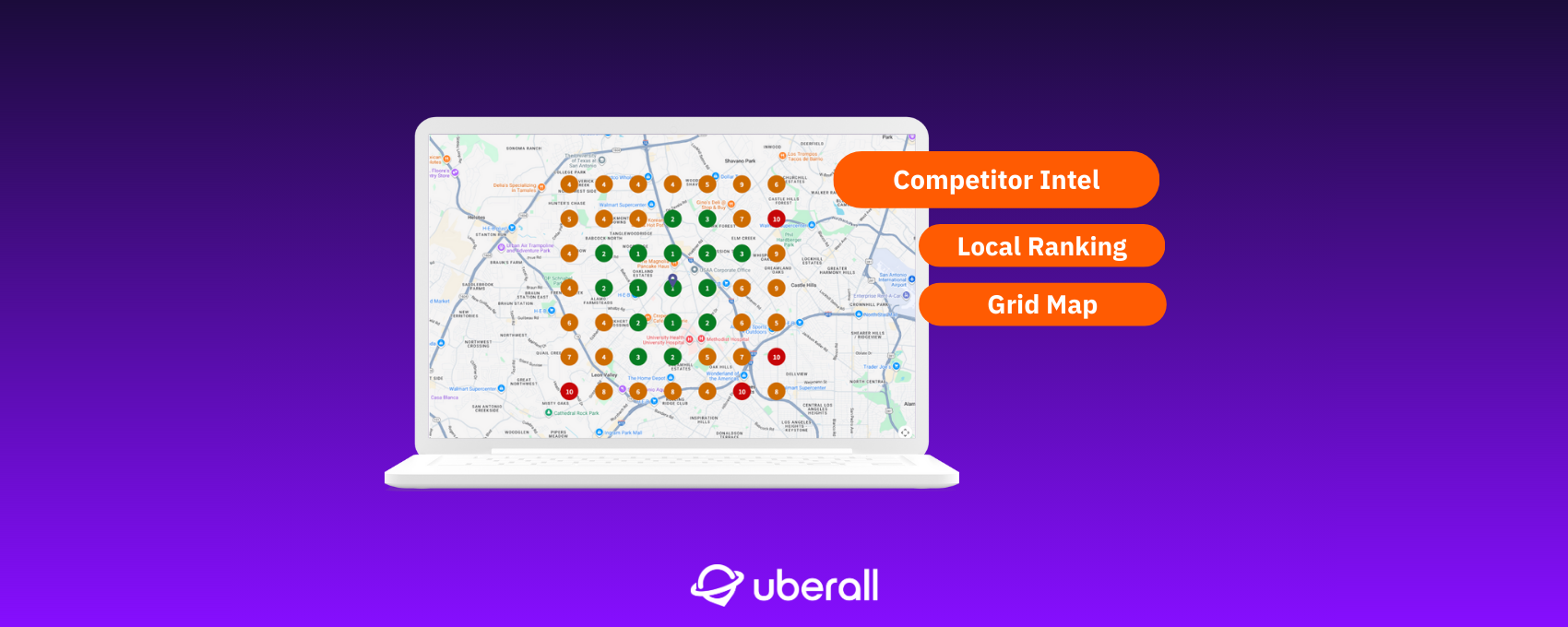
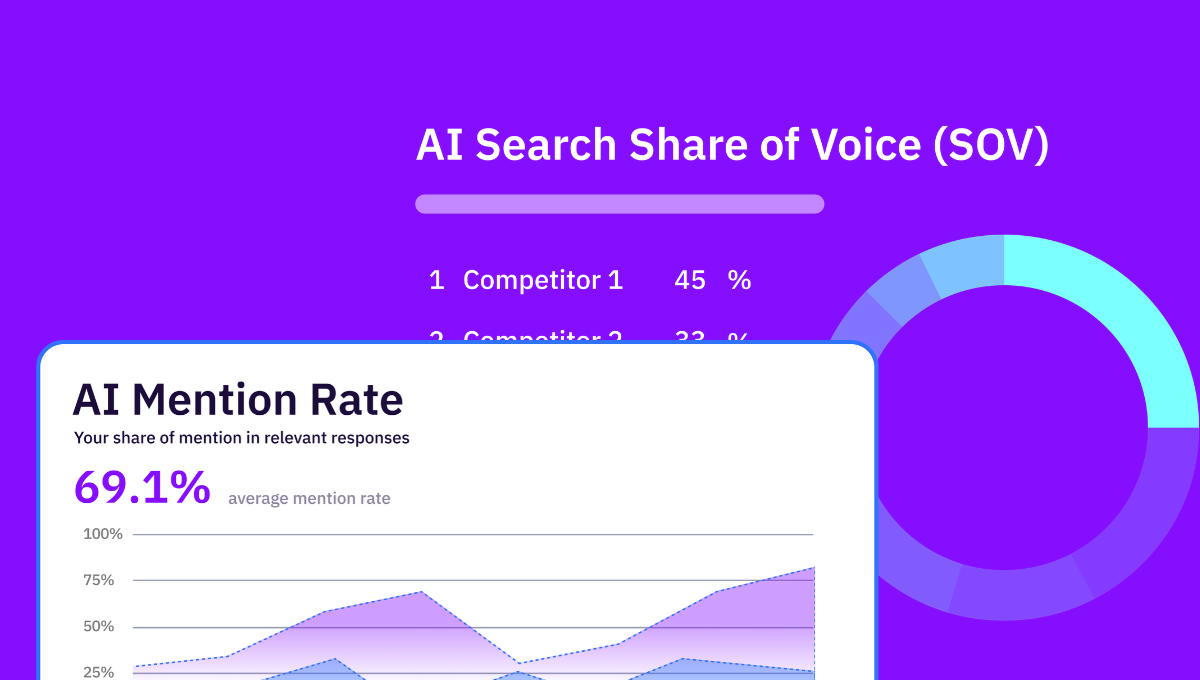
Uberall Analytics includes Local SEO Report functionality for running, viewing, and exporting local SEO data. Teams can compare keyword rank performance across locations to identify stores that need attention. Its Competitive Intelligence Grid Map overlays a grid on the area around each location and color-codes rankings at each point, so teams can see where visibility drops off and which nearby competitors outrank them. The table beneath the map lists each competitor’s average local rank, review count and rating, domain authority, backlinks, categories, and distance. See how teams use it in this local SEO audit guide.
Location Performance Score provides a data-driven view of location performance across visibility, reputation, and engagement. It gives marketing teams a standardized way to compare local activity and prioritize work across a large location portfolio.
Restaurant ROI reporting
Uberall Analytics shows how clicks to directions, clicks to calls, and other CTAs drive visits to store, connecting online engagement with offline actions. For restaurant teams tracking local search ROI and foot traffic attribution, this shows which listings generate the customer actions that lead toward visits and revenue.
Revenue Estimator provides a pre-populated revenue estimate by business or location using Uberall industry data on click-to-visit and visit-to-purchase rates. It is an estimate based on benchmark conversion rates, not a measured store-visit count. Review the restaurant local SEO guide for more on connecting local search activity to restaurant visits.
KFC reported a 37:1 ROI with Uberall after improving data consistency and online visibility. This is one customer’s reported result, not a universal benchmark.
Consideration: Grid Map reports run monthly, on up to 5 keywords per location, so check that this cadence and keyword volume fit your reporting needs.
BrightLocal
Best for: Agencies and in-house SEO teams that prioritize local rank tracking, citation work, and neighborhood-level visibility analysis.
BrightLocal combines local rank tracking, listings management, reputation management, API solutions, and Citation Builder workflows for building and cleaning listings. Its platform page describes neighborhood-level local visibility tracking, which makes it a strong fit for agencies whose work centers on local rank analysis.
BrightLocal also promotes an AI Visibility Tracker for monitoring business presence across ChatGPT and Google AI systems. Its platform page does not describe store-visit or foot-traffic attribution, so teams focused on visits and revenue should assess a separate attribution workflow.
Semrush Local
Best for: SEO teams and agencies already using Semrush that need map rank tracking.
Semrush Local keeps business listings, including Facebook and Bing, up to date. It also provides Google Business Profile insights and supports bulk edits and optimization across locations.
Map Rank Tracker shows local ranking performance against competitors. The product page does not list call or direction metrics by name, so buyers should not assume interaction analytics are included.
Moz Local
Best for: Teams that need listing management and Local Grid rank tracking for target keywords.
Moz Local keeps listings updated across search engines, directories, social media, apps, and data aggregators. It also identifies missing listing fields and records that need action.
Local Grid provides rank tracking for target keywords. Some features are limited to specific Moz Local packages, and organizations with more than 50 locations go through sales. See how Uberall compares with Moz Local.
Yext
Best for: Brands that want listings-centered analytics by publisher.
Yext Listings manages listings across more than 200 online directories. Listings Verifier detects and resolves errors, duplicates, and publisher overwrites.
The platform tracks impressions, clicks, calls, and directions by publisher or location. Its product page does not describe local keyword or grid rank tracking. See how Uberall compares with Yext.
Birdeye
Best for: Multi-location brands that want listings, reviews, social, reporting, and broader customer-experience functions evaluated together.
Birdeye lists Listings, Reviews, Social, Marketing Automation, Pages, Reporting, Surveys, Insights, and Competitors among its product areas. It also serves restaurants, making it relevant for teams that want local presence management alongside reputation and customer-experience workflows.
Its product lineup does not list rank-grid tracking or foot-traffic attribution, so assess those requirements separately. See how Uberall compares with Birdeye.
Verdict by Segment
Enterprise multi-location brands
Uberall fits enterprise teams that prioritize centralized directory distribution, multi-location analytics, and location-performance measurement. Its listing capability spans more than 150 directories, while Location Performance Score brings visibility, reputation, and engagement signals into location-level reporting.
Restaurant chains
Uberall is a practical choice for restaurant chains that need Analytics to report direction clicks, call clicks, and other CTAs by location and estimate their revenue impact. Revenue Estimator uses benchmark click-to-visit and visit-to-purchase rates rather than measured visit counts, so keep it separate from verified visits. KFC’s reported 37:1 ROI remains one customer example rather than a prediction.
Agencies
BrightLocal suits agencies where neighborhood-level visibility tracking, citation work, and API-oriented local SEO workflows are central. Semrush Local also fits agencies that already use Semrush and need map rank tracking. Confirm store-visit attribution separately with either vendor.
In-house SEO teams
BrightLocal, Moz Local, and Semrush Local fit teams that run rank tracking as a standalone SEO workflow. Uberall fits teams that want grid-based rankings against nearby competitors in the same platform as listings and location-performance reporting. Choose based on whether rank-analysis depth or integrated multi-location operational reporting is the primary requirement.



1,800 brands trust us to stay visible
— not just show up once or twice in local search.




Frequently asked questions
Audit consistent names, addresses, phone numbers, hours, categories, attributes, descriptions, and other location details. Listing-data governance reduces the chance that customers receive conflicting information when they search across directories and maps.
Rankings, listing views, calls, website clicks, and direction requests show search visibility or customer engagement. Foot-traffic attribution connects online actions, including listing views and direction requests, with restaurant visits through a separately defined method.
Use neighborhood-level tracking when local results vary materially based on the searcher’s nearby location. Uberall’s Competitive Intelligence Grid Map, BrightLocal’s neighborhood-level visibility tracking, Moz Local’s Local Grid, and Semrush Local’s Map Rank Tracker all show how rankings change across an area.
Require a documented connection between local search activity and physical visits instead of treating direction requests as completed visits. The workflow should distinguish engagement from verified visits, and KFC’s reported 37:1 ROI is one restaurant-chain outcome, not a forecast.
Agencies and SEO-led teams should prioritize rank tracking, citation requirements, and reporting exports. Enterprise operational teams should prioritize location-data governance, distribution, and cross-location performance reporting.