If You’re Invisible to AI — Here’s How to Change It with Reviews
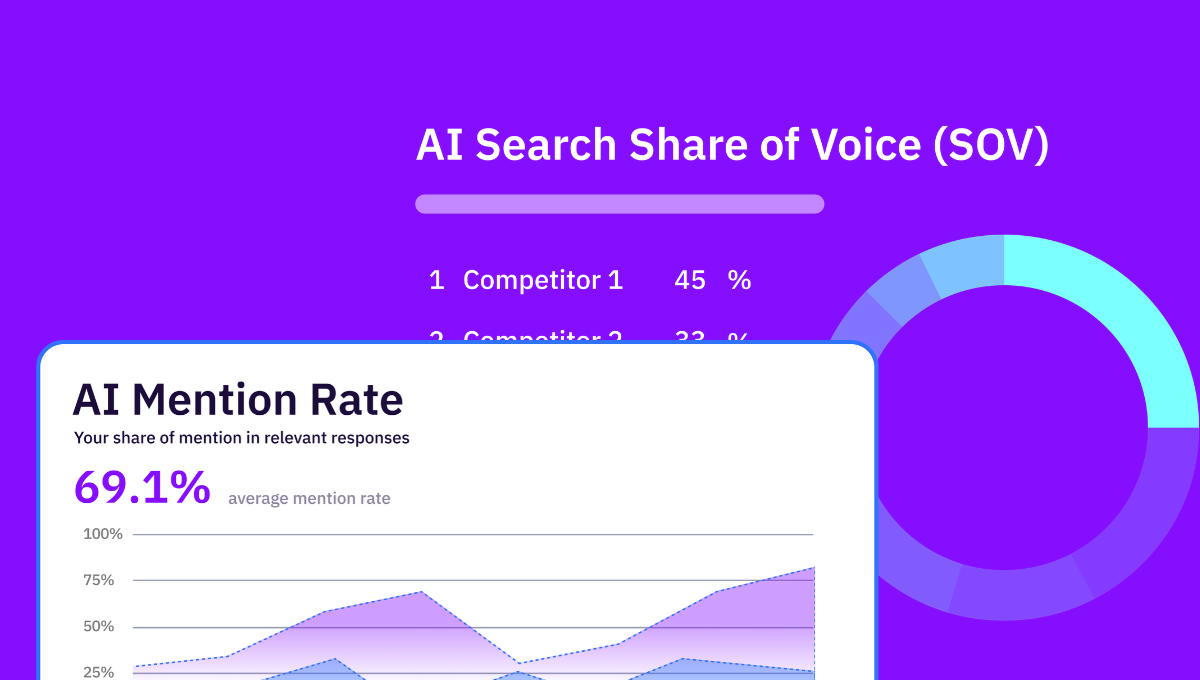
If you’re invisible in AI search — or just figuring out how to solidify your AI Share of Voice, here‘s why you should look at your electronic word of mouth (EWOM) marketing and review strategy.


Key takeaways:
- AI models have hard star-rating thresholds. ChatGPT references reviews in 58% of its responses; Perplexity uses them in 100%.
- AI needs detailed, descriptive, recent reviews published as crawlable HTML with schema markup. A generic five-star review won’t match a specific query.
- 65% of businesses don’t know where to start with AI visibility and only 5% track it systematically.
"I highly recommend tracking and reporting on all aspects associated with reviews, including NPS and sentiment analysis trends over time to understand how real-world customers are experiencing your business, whether customer experience is yielding referrals, and where the business can improve to retain existing customers and earn new ones."

Do you know what ChatGPT or other AI chat tools say about your local business?
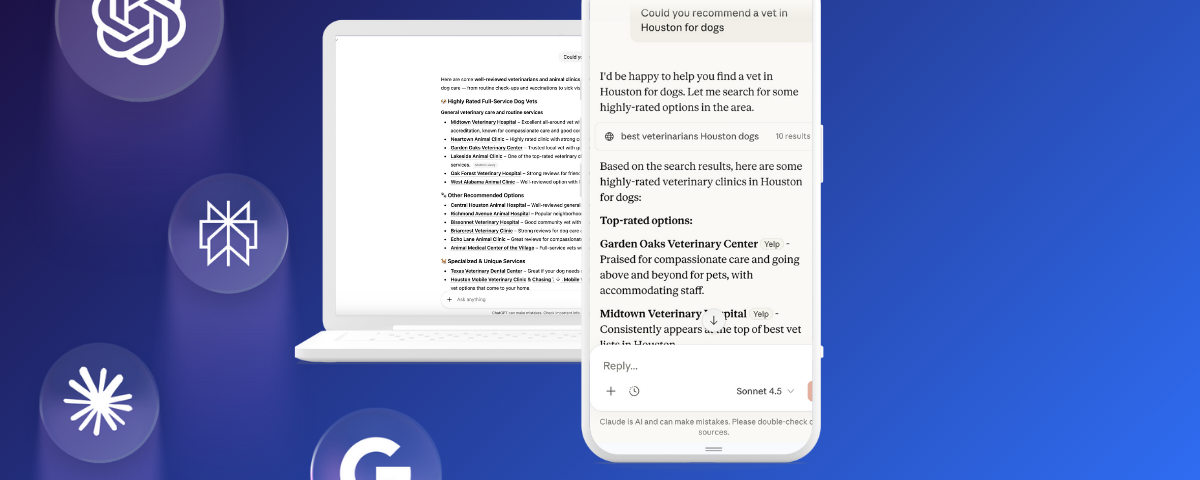
Let’s test it right now. Go to ChatGPT, Gemini, Perplexity, or any other AI chat you like to use.
Now enter a prompt: “What is the best [service] in [area]?” Make sure to use your own business category and your own area in the prompt — for example, “What is the best kitchen renovation company in Houston?”
What does the AI tell you? Are you visible? How about your competitors?
Next, you can try another prompt: “What do people say about [business name]?”
What kind of things come up? Are the claims backed up by real customer experiences? Or does the AI pull up random discussion forums from seven years ago?
If nothing comes up, don’t worry. It can be changed in a matter of weeks. It has been done with other local businesses.
This article helps you understand why AI visibility is important and how you can easily gain it with the help of reviews and electronic word of mouth (eWOM). And I have some research to back it all.
AI is the Future, and the Future is Now
This is what local businesses should be solving right now: How does AI see and represent my brand? Am I even visible? Can potential customers find out about me?
Almost everyone is interested in increasing their AI visibility, but few have taken concrete steps. Businesses are not aware of what they should do or where to start.
Many companies also view optimizing for AI as “preparing for the future.”
But the shift from traditional Google search to AI search has already begun:
- ChatGPT alone processes over 2 billion queries daily with 800 million weekly active users.
- Google AI Overviews reaches 2 billion monthly users globally.
- 40% of Gen Z already prefer AI search over traditional search engines.
“Preparing for the future” without taking action is the worst thing that brands can do right now.
Those who seize the moment and take AI visibility seriously will get a massive head start on those who wait.
Electronic Word of Mouth Is the Gatekeeper
Recent 2026 reports from international experts show a crude image of AI search:
- Increasing local visibility on ChatGPT is 30 times harder than increasing visibility on Google. AI tools are much more selective of which brands get featured in answers.
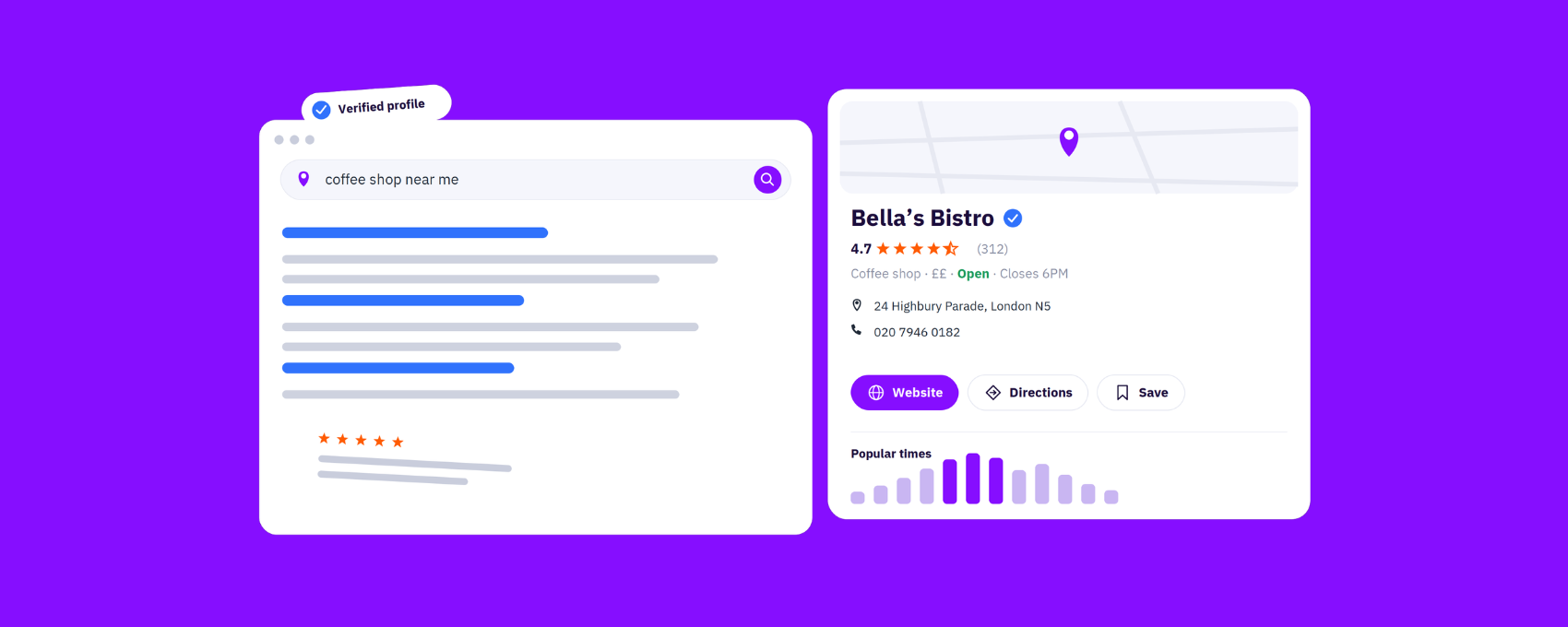
- Reviews act as gatekeepers to AI recommendations. Businesses that appear in Google search might not appear in AI answers if their star rating is lower.
- Star ratings act as thresholds that businesses need to exceed to get mentioned in AI tools.
When considering AI optimization, most businesses focus on content. While that is a very important part of it, it leaves out a huge factor.
AI search engines actively look for third-party validation and compile results from various sources into one answer.
Customer reviews are one of the strongest signals AI uses for this validation. According to a study by Feefo, ChatGPT references reviews in 58% of its responses, while Perplexity uses reviews in 100% of them.
Experts have observed that while Google might prioritize factors like proximity and relevance over ratings, language models take electronic word of mouth more seriously.
This is a fundamental shift from traditional search engine optimization.
In Google’s world, reviews help your local ranking. In AI’s world, your customer review strategy can make or break whether you get recommended at all.
The Easiest Lever You Can Pull for AI Visibility
AI search was not on our team’s radar — until it was.
Suddenly, we noticed that AI started using the reviews as a source to recommend businesses.
Why this is great news to you as a local business:
Content optimization, although critical to being competitive in traditional and AI search, takes extra dedicated resources, such as tools and teams. Reviews, by comparison, can be more easily tackled.
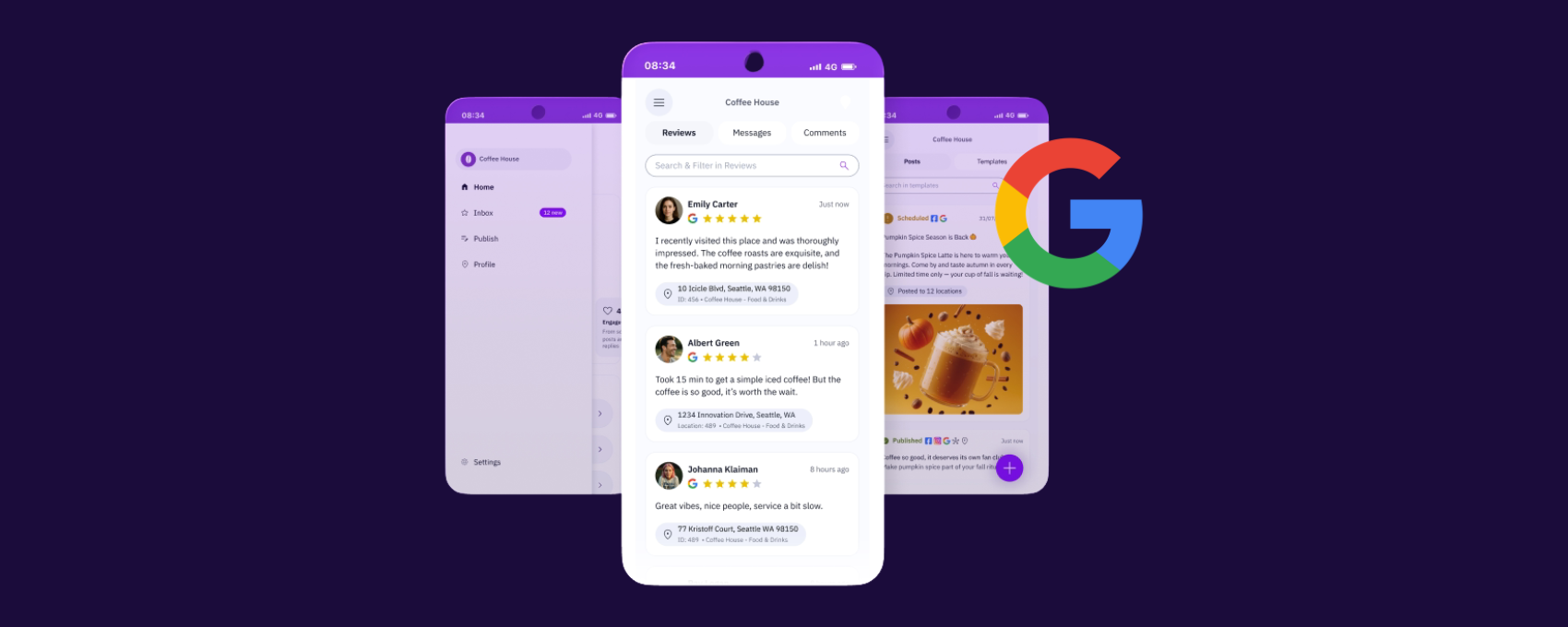
You already have Google reviews and maybe even some internal feedback — now’s the time to transform them into AI-readable data.
What Type of Reviews Actually Move the Needle for AI?
Not all reviews are created equal in the eyes of AI. Here’s what makes a review genuinely effective for AI visibility.
1. High Average Rating
Language models are more strict about star ratings than traditional search engines.
- ChatGPT quotes businesses that have 4.3 stars on average.
- Perplexity recommends businesses with a 4.1 average rating.
- Gemini is more lenient with just a 3.9 average rating.
This means that you might not win with proximity or relevance in AI search if your star rating is not high enough.
2. Detailed, Descriptive Reviews
A language model needs language it can process, reference, and quote.
A review that says “Great service, highly recommend” is fine for your Google rating — but a review that says “They renovated our kitchen in three weeks, stayed within budget, and the project manager kept us updated daily” gives AI something it can actually use to answer a specific customer question.
The more specific the review, the more useful it is for AI.
3. Reviews That Mention Services, Locations, and Context
When a customer mentions what service they used, where they’re located, or their situation, they’re essentially writing the kind of content AI needs to match your business with future queries.
When someone asks “Who’s the best emergency plumber in downtown Chicago?,” the AI is looking for signals that mention “emergency,” “plumber,” and “Chicago.”
A generic five-star review won’t match that query. A review that describes an emergency plumbing situation in a specific neighborhood will.
4. Fresh Reviews
AI algorithms increasingly favor recency. A hundred five-star reviews from 2022 carry less weight than 50 reviews from the last three months.
A steady flow of recent reviews sends a strong signal that your business is active, current, and consistently delivering good experiences.
5. Reviews on Crawlable, High-Authority Pages
This is the technical piece that trips up a lot of businesses. Your reviews need to be on pages that AI can actually read. That means:
- Published as HTML text — not loaded dynamically via JavaScript in a way that bots can’t access.
- On a high-authority domain — site authority (domain rating) directly affects how much weight AI gives to the content hosted there.
- With proper schema markup — Review and AggregateRating schema help AI parse, categorize, and cite the data correctly.
- Regularly updated — so AI bots have a reason to keep coming back and re-indexing.
If your reviews live exclusively on your Google Business Profile, they’re essentially locked behind a wall that most AI tools can’t easily climb.
Strategies to Get AI-Effective Reviews
Knowing what makes reviews effective is one thing. Actually getting those reviews is another.
Here’s what I recommend.
1. Ask at the Right Moment
The best reviews come from customers who are still in the glow of a positive experience.
For most service businesses, this means asking within days of completing a project — not weeks later when the details have faded and the emotional connection has cooled.
For multi-location businesses, this is particularly important to systemize. Each location needs a consistent review collection process triggered by key milestones in the customer journey — delivery, installation, service completion. Don’t leave it up to individual managers to decide when and whether to ask.
2. Make It Easy, But Guide the Detail
The biggest tension in review collection is this: You want detailed reviews, but you also want a low-friction process.
The solution isn’t to ask customers to write an essay. It’s to prompt them with the right questions.
Instead of a generic “Leave us a review,” try:
- “Tell us about your experience with us.”
- “How would you describe your experience?”
- “What is the reason for giving this particular star rating?”
These prompts naturally elicit the kind of specific, descriptive content that AI finds valuable and reduces the mental workload for the customer.
3. Display Reviews Where AI Can Find Them
Collecting reviews is only half the equation. You need to display them in a way that AI can actually read, parse, and use:
- Publish reviews on your website with proper schema markup (Review, AggregateRating, LocalBusiness)
- Include the full review text, star rating, date, and reviewer name
- Create a structured summary page — average rating, total count, common themes, frequently mentioned strengths
- Cross-link review pages with your service pages, location pages, and Google Business Profile
The goal is to make AI’s job as easy as possible. When everything is structured and centralized, AI doesn’t have to piece information together from scattered, inconsistent sources. It can just read, reference, and recommend.
4. Keep the Flow Continuous
This isn’t a one-and-done project. AI bots return regularly to re-index pages.
Build a continuous process. Automate where you can.
If your last batch of reviews is three months old, the freshness signal weakens, and AI may start favoring competitors with more recent feedback.
For multi-location businesses, this means establishing a standardized review collection workflow across every location. An automated process that runs in the background without anyone having to think about it.
AI visibility compounds over time. When AI recommends your business, customers interact with you, have positive experiences, and some of them write reviews.
Those reviews become part of the data that AI models learn from, making the AI even more likely to recommend you in the future.
Seize the Moment!
Let me bring this back to where I started.
Most businesses are still just cautiously curious about AI as something that could be useful in the future. In a survey we conducted, we found that
- 65% don’t know where to start with AI visibility.
- 60% don’t track their AI visibility at all — they have no idea whether AI recommends them or their competitors.
- Only 5% monitor their AI visibility systematically.
- 55% cite a lack of resources as a major barrier, 45% name a lack of technical abilities.
If you are not yet visible in AI search, you have plenty of time to get ahead. The competitive landscape for AI visibility is still wide open in most local markets, but it won’t stay that way. Now is the time to strike.
It’s a flywheel! And right now, very few local businesses have started spinning it.
Your customers are already talking to AI. The question is whether AI knows enough about your business to recommend you back.


1,800 brands trust us to stay visible
— not just show up once or twice in local search.


.png)

Frequently asked questions
Electronic word of mouth (eWOM) is consumer-generated, consumption-related communication shared through digital channels — including online reviews, social media posts, forum discussions, and video testimonials. Unlike traditional word of mouth, eWOM reaches a global audience, stays online indefinitely, and can now be read and referenced by AI search engines when generating recommendations for other consumers.
Traditional word of mouth is limited to face-to-face conversations between people who know each other. eWOM, by contrast, travels through digital platforms like review sites, social media, and forums, giving it a far wider audience and a permanent digital footprint. This is what makes eWOM valuable to AI: It creates a machine-readable record of customer sentiment that AI models can process, reference, and use in their recommendations.
The most effective reviews for AI visibility are detailed, descriptive, and specific. They mention the service used, the location, and the customer’s situation — giving AI the language it needs to match a business with relevant queries. Reviews should also be recent, carry a high star rating, and be published as crawlable HTML on high-authority pages with proper schema markup (Review, AggregateRating).
According to Aino Valtonen, the minimum star rating varies by AI platform. ChatGPT tends to cite businesses averaging 4.3 stars or higher. Perplexity recommends businesses at 4.1 stars, while Gemini is more lenient at 3.9. These thresholds mean a business visible in Google search may still be excluded from AI answers if its rating falls below the model's cutoff — a key difference from traditional SEO, where proximity and relevance can compensate.
Multi-location businesses can strengthen their eWOM strategy by systematizing review collection across every location — triggered by key customer journey milestones like delivery, installation, or service completion. Prompt customers with specific questions rather than generic requests, publish reviews as crawlable HTML with schema markup, and automate the process so fresh reviews flow continuously without relying on individual managers.
Yes, online reviews help local businesses increase their online visibility in traditional and AI search. In traditional Google search, reviews improve local ranking but are one of many factors; proximity and relevance can compensate for a lower rating. In AI search, reviews act as gatekeepers: Businesses that don’t meet star-rating thresholds may not appear in AI answers at all. AI models also parse review text for specific language they can cite, making the content of reviews — not just the rating — a deciding factor in whether a brand gets recommended.
Businesses can see measurable improvement in AI visibility within weeks. In a Trustmary study tracking 76 brands over February–March 2026, 65% improved their AI visibility after optimizing review pages. Some results were dramatic: A construction company went from 47% to 73% visibility in three weeks, and a real estate operator jumped from 0% to 70% on Gemini in four weeks.