What GEO Means for Enterprise Brands: A Clear Guide



Customers now find information through conversational AI, or "answer engines," like ChatGPT, Perplexity, and Gemini. This shift introduces a new marketing discipline: Generative Engine Optimization (GEO).
So, what is GEO? It’s the practice of optimizing your brand's entire online presence to be favorably included, described, and recommended in the answers these AI engines generate. For large enterprise brands, especially those managing numerous physical locations, understanding and implementing a GEO strategy is no longer optional — it's essential for future visibility, customer trust, and growth.
How is GEO Different from Traditional SEO?
It's easy to confuse GEO with the search engine optimization (SEO) practices we’ve known for years, but they have different primary goals. SEO traditionally focuses on ranking for specific keywords on a search engine results page (SERP). GEO, on the other hand, is about becoming the most accurate and authoritative answer to a user's question, or "prompt."
Think of it this way: If SEO is like organizing a library so people can find your book using a card catalog, GEO is about ensuring the AI librarian has read your book, understands it deeply, and confidently recommends it when someone asks a relevant question.
This doesn't mean GEO replaces SEO. In fact, GEO is built on the foundation of strong SEO. Technical practices like using structured data, creating high-quality content, and maintaining a healthy backlink profile are crucial signals that AI engines use to determine authority and trustworthiness. This is why it is critical to understand what Generative Engine Optimization is and how it creates a new battleground for local search.
Why GEO is Critical for Multi-Location Enterprise Brands
While GEO is important for every business, it presents a unique set of challenges and massive opportunities for enterprises that manage hundreds or even thousands of physical locations.
The High Cost of Inconsistency
AI answer engines rely on consistency to determine trustworthiness. For an enterprise, even minor discrepancies in a location’s name, address, phone number (NAP), or business hours across various online directories can cause an AI to lose confidence in your brand's data.
This inconsistency can lead to your brand being completely omitted from an AI-generated answer or cause the AI to present incorrect information to a potential customer, such as sending them to a closed store or giving them the wrong phone number. This results in lost sales and erodes brand trust. Managing this data manually across an entire enterprise is impossible, which is why a multi-location SEO tool is no longer a luxury but a necessity for maintaining consistency at scale.
Capturing High-Intent Local Customers
Users interact with AI engines using specific, conversational prompts that often carry high local intent. For example, a customer might ask, "Where can I find a pet-friendly cafe with outdoor seating near me?" or "What's the best-rated auto repair shop open on a Sunday in downtown Austin?"
A strong GEO strategy ensures that your individual locations are optimized to become the definitive answer to these hyperlocal queries. By providing detailed, accurate, and rich information about what makes each location unique, you can intercept customers at the precise moment they are looking to make a purchase, driving highly qualified foot traffic directly to your stores.
Building Brand Authority in the Age of AI
AI models are designed to find and synthesize information from the most authoritative sources available. For an enterprise brand, authority isn't built from a single source. It's the culmination of a complete and consistent digital presence.
AI synthesizes all these signals to form an impression of your brand. This includes:
- Structured data on your corporate and local web pages
- Accurate and complete business listings on all relevant directories
- A steady stream of fresh, localized social media content
- The quantity and quality of customer reviews
By focusing on an effective hyperlocal marketing strategy that strengthens each of these areas, you demonstrate to AI engines that your brand is a reliable and authoritative source of information.
The Core Pillars of an Enterprise GEO Strategy
To win in the age of AI, enterprise marketing teams can focus on three actionable pillars to build a strong GEO strategy.
Pillar 1: Master Your Foundational Data
The first step is to make your brand easily understandable to machines. This means ensuring your foundational data is flawless.
- Consistent Listings: Your brand must ensure that every single location's information is accurate and perfectly synchronized across all 150+ relevant directories and platforms where customers search, including major players like Google, Apple Maps, and Yelp.
- Structured Data: Implement proper schema markup on all local pages. This provides a clear, machine-readable "label" for key information like products, services, hours, payment methods, and accessibility options, allowing AI crawlers to understand your offerings instantly.
- Location Intelligence: Maintain accurate, structured location data, including hours, services, and attributes, across every location so AI models can correctly match each location to a customer's prompt.
Pillar 2: Create "Answer-Ready" Content
The focus of content strategy must shift from targeting keywords to directly answering customer prompts.
- Address Prompts, Not Just Keywords: Research the specific, long-tail questions your customers are asking about your industry, products, and services. Create detailed, unique content on your website, blog, and local pages that provides the single best answer to these questions.
- Use Customer Reviews: Reviews are a goldmine of answer-ready content. Encourage customers to leave detailed feedback about their experiences. AI pulls powerful insights from the authentic language people use when describing your brand, products, and services.
- Use Localized Social Content: Go beyond generic corporate posts. Use a platform that can help you create and schedule localized social media content and ads that highlight community involvement, local promotions, and the unique character of each location.
Pillar 3: Measure What Matters for GEO
In AI search, where traditional website traffic may decline, you must track new metrics to measure success.
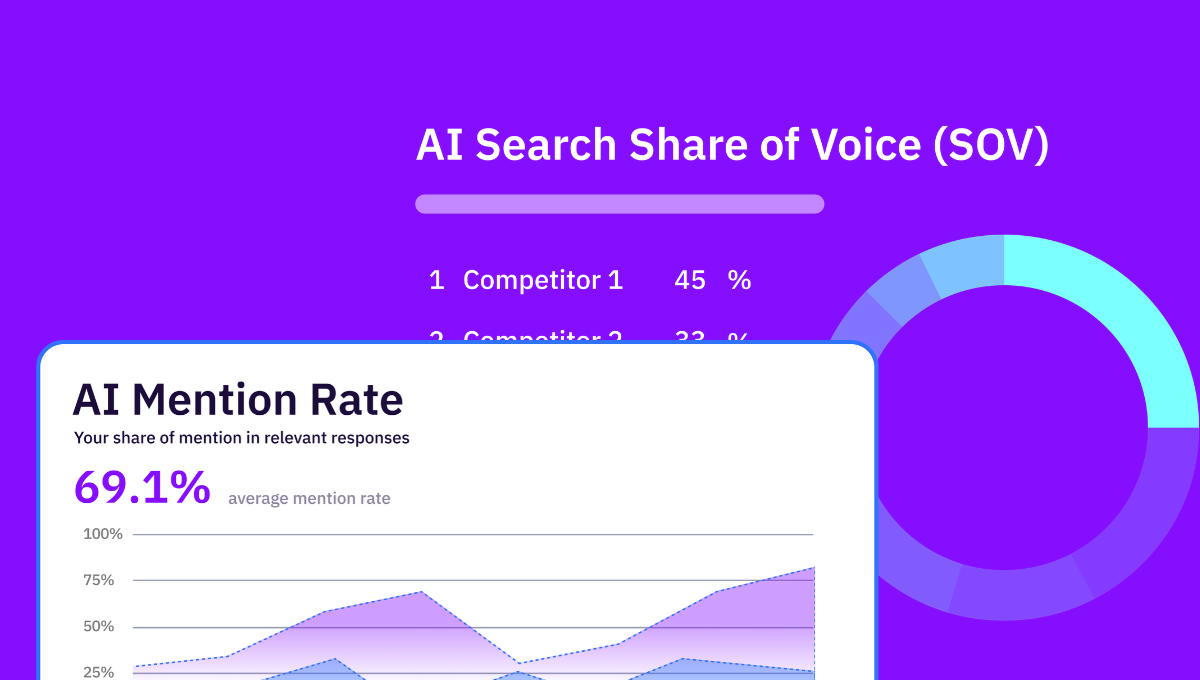
- Share of Voice (SoV): Track how often your brand is mentioned in AI-generated answers for your most important prompts compared to your competitors.
- Mention and Citation Rate: Monitor how frequently your brand is included or cited as an authoritative source in AI responses.
- Performance Analytics: Use a unified dashboard to connect your digital visibility to real-world outcomes. Strong analytics tools can show how your GEO efforts translate into tangible actions like phone calls, direction requests, and in-store visits.
The Right Technology for Enterprise GEO
Attempting to manage a GEO strategy across an entire enterprise manually is not just inefficient — it's impossible. The scale and complexity require a purpose-built platform designed for the challenges of multi-location brands.
An enterprise-grade GEO solution must provide:
- Centralized management of all business listings to ensure 100% consistency everywhere.
- AI-powered tools for monitoring, analyzing, and responding to customer reviews at scale.
- Features to identify high-value customer prompts and improve content to win mentions in AI search.
- Advanced analytics that close the loop between online marketing efforts and real-world revenue.
Platforms like Uberall are built to help enterprise brands manage their entire local presence, from listings and reviews to social and ads, so you can be the brand customers choose in the new era of AI-powered search.
Conclusion: Become Answerable, Not Just Searchable
The customer journey has irrevocably changed. The challenge for brands is no longer just to be searchable but to become answerable. Success in AI search depends on your ability to be an accurate and authoritative answer wherever customers look for you.
For enterprise brands, a winning GEO strategy comes down to three core principles: maintaining impeccable data consistency across all locations, creating rich and relevant "answer-ready" content, and measuring performance with new metrics that reflect the AI-driven world.
The brands that embrace GEO today will build a durable competitive advantage. They will become trusted recommendations in AI answers, while those that fail to adapt risk becoming invisible as customers discover businesses through AI.



1,800 brands trust us to stay visible
— not just show up once or twice in local search.





.png)