GEO Studio
Your brand is invisible to AI.
Let's fix that.
GEO Studio shows you exactly how ChatGPT, Gemini, Perplexity, and Google AI Overviews talk about your brand and locations — and gives you the tools to change it.

Discover Why 1,000+ Marketing Teams Trust Us to Get Results
Did You Know...?
AI-powered tools no longer surface links—they generate answers and actively choose which brands they trust most.
in consumer spend expected to flow through AI-driven search by 2027
of all search traffic now passes through large language models
of multi-location brands are completely missing from AI recommendations
higher click-through intent from AI-generated answers versus traditional SERPs
What GEO Studio Does
Everything you need to own AI-powered search
Three core capabilities, one unified platform. Measure your AI presence, optimize your content, and scale your visibility — across every model, every market, every location.
Own the narrative across AI Search
Move from being 'searchable' to 'recommended.' See exactly how your brand shows up across every AI engine, and take control of the results.
- Tracks across all major large language models (LLMs): ChatGPT, Gemini, Perplexity, Claude, Copilot, Grok, Google AI Overviews, Google AI Mode, and DeepSeek.
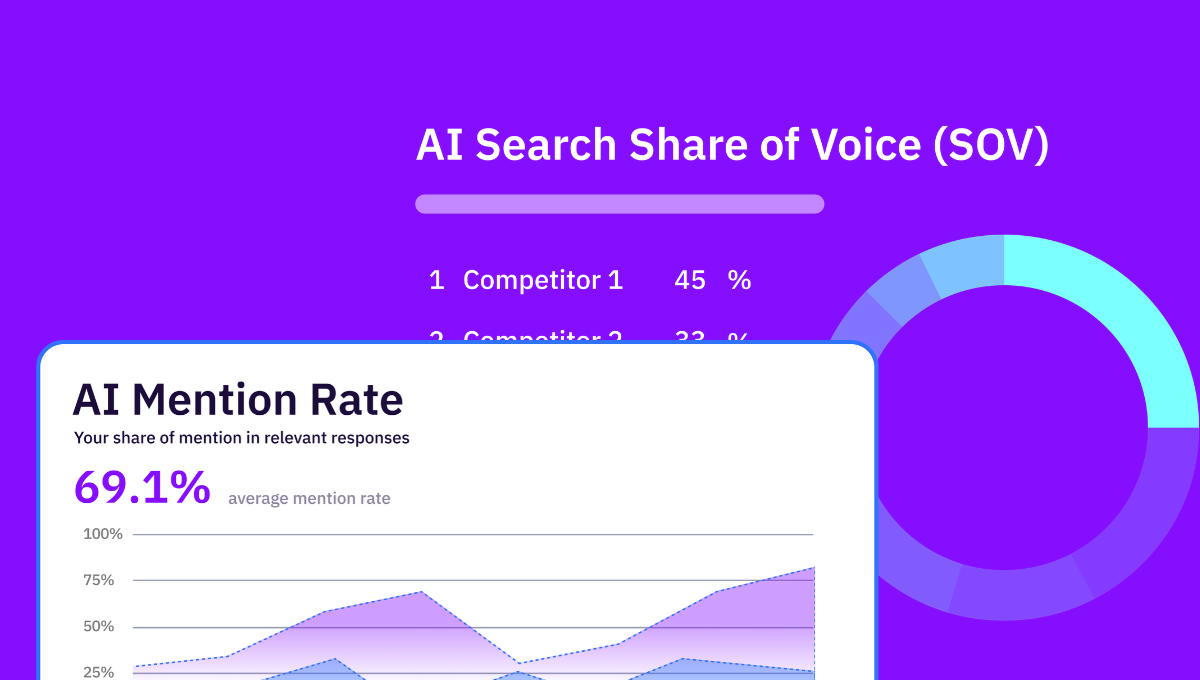
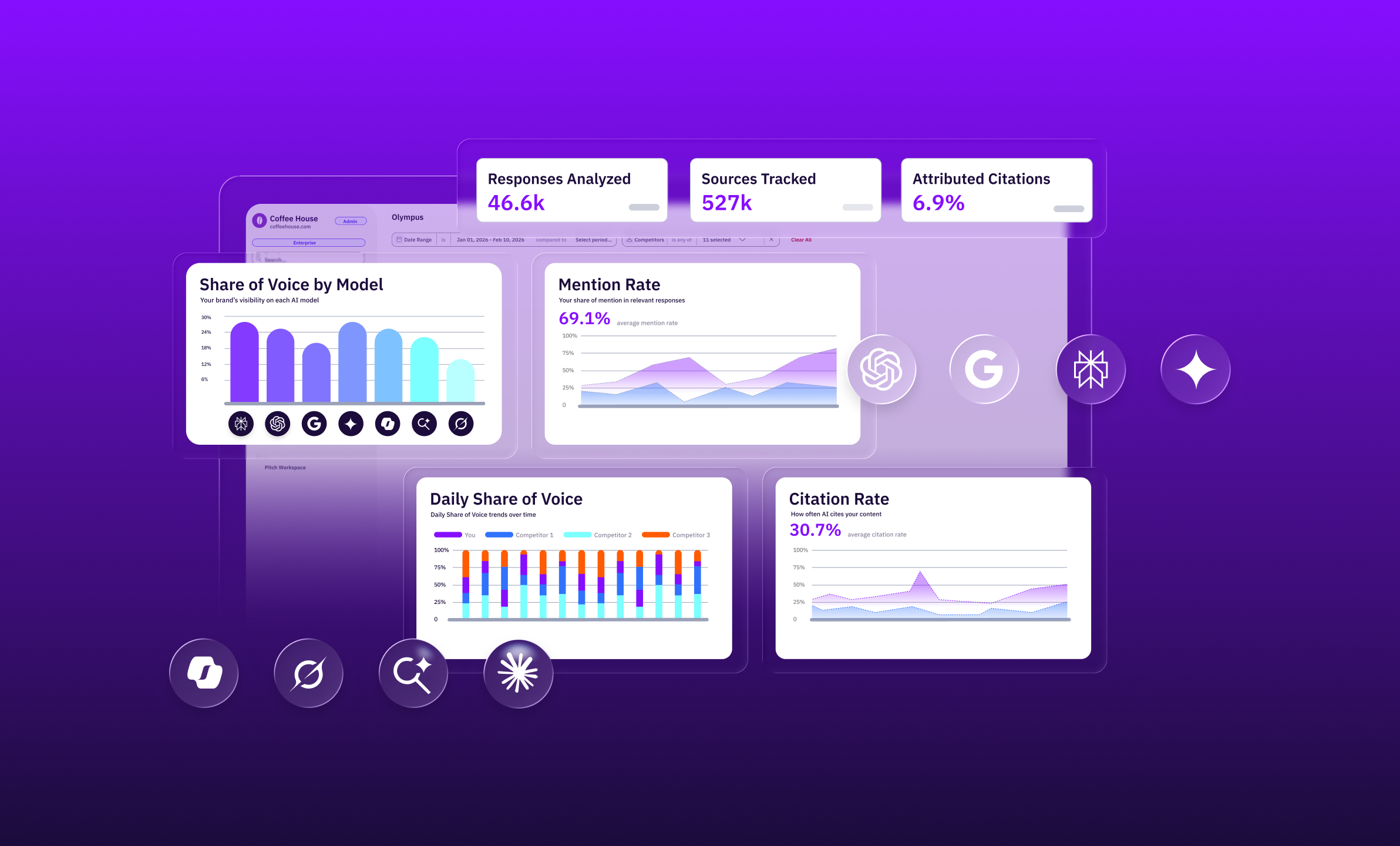
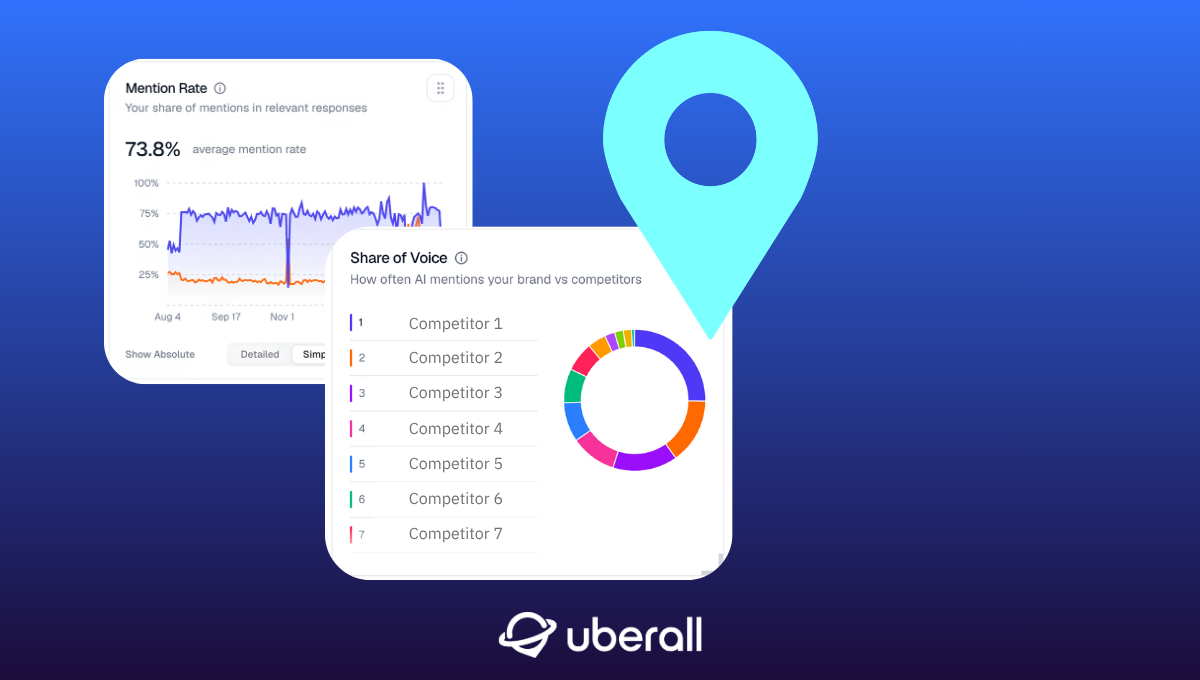
- Share of voice monitoring: Track how often your brand appears in AI search results compared to competitors.
- Competitor analysis: See which prompts are tipping share of voice against competitors, across every model.
- Social listening: Monitor which sources AI models cite, and join the conversation on YouTube, TikTok, LinkedIn, and Reddit.
- Local Generative Engine Optimization (GEO): Break down every visibility metric by location. See how AI recommends each store, branch, or market, not just your brand as a whole.
Face factual errors or misstatements in AI responses
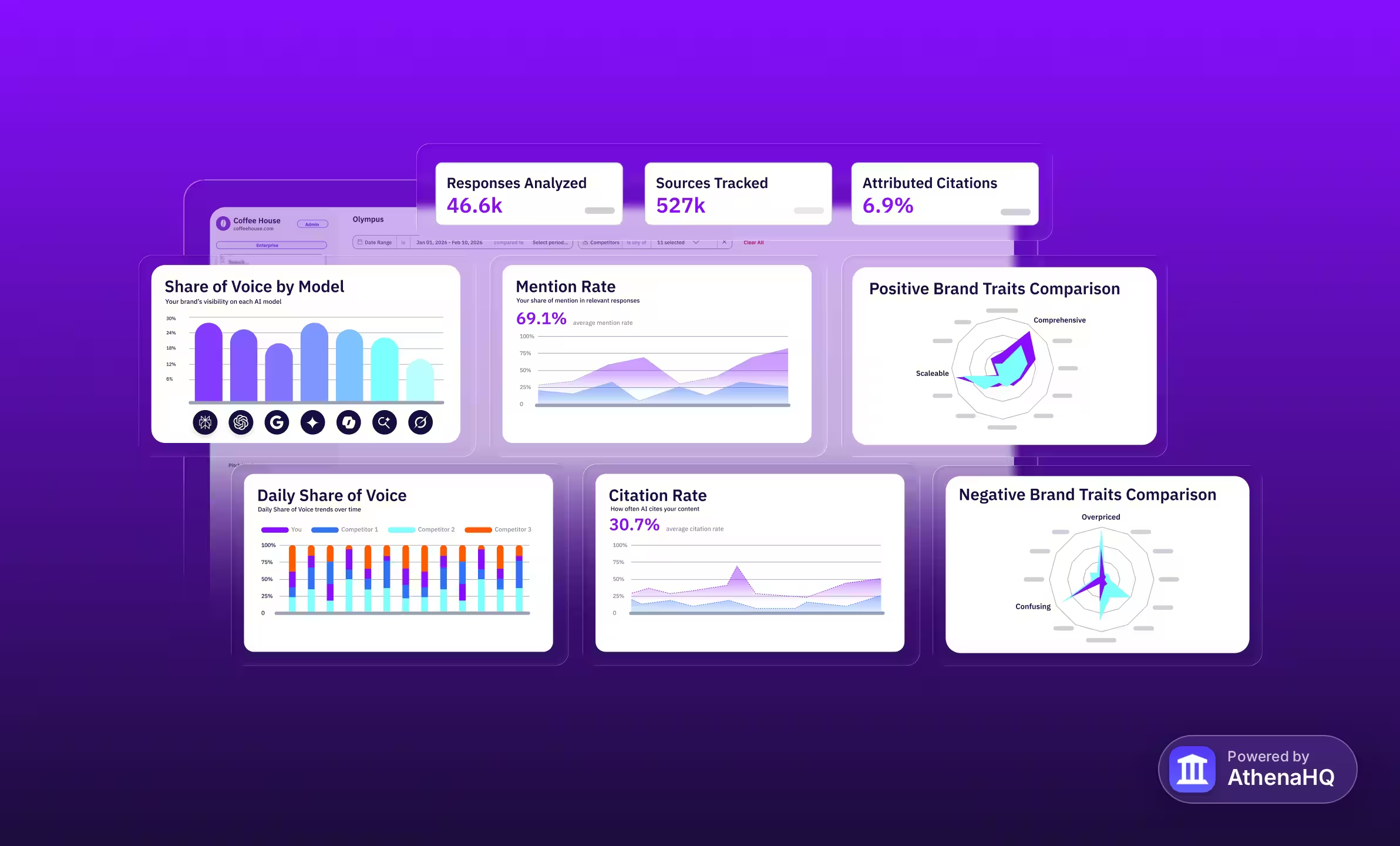
Master your brand perception across the AI landscape
Know exactly how AI sees your brand.
See what AI is saying about you, accurately or otherwise.
- Brand sentiment analysis: Track the positive and negative traits AI assigns to your brand, so you can improve how you're perceived.
- Source visualization: See which domains drive AI mentions for you versus your competitors, and spot the content gaps to close.
- Hallucination detection: Catch factual errors the moment AI gets
AI Citation Lift by using Structured data
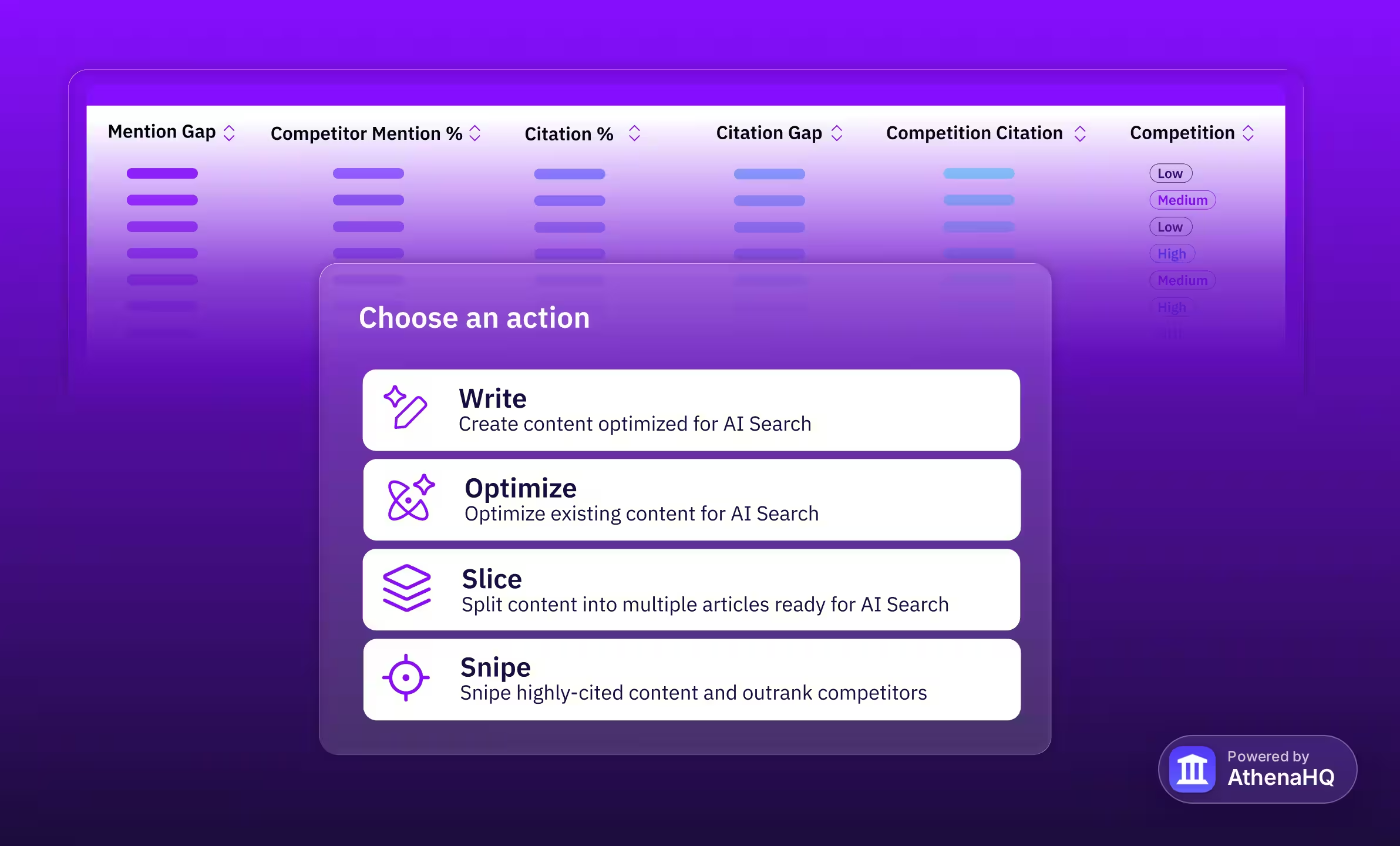
Turn insights into action
Find the prompts, segments, and gaps where action makes the biggest difference.
- Prompt universe analysis: Spot emerging search patterns and new content opportunities before your competitors do.
- Multi-level insights: Compare AI performance across personas, locations, and segments, and find your strongest opportunities for growth.
- Gap-driven recommendations: Pinpoint the on-page and off-page actions needed to win the prompts you're losing.
Google AI Overviews appearance in the SERP
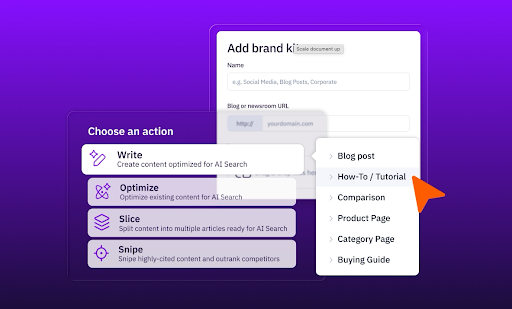
Build The Answers That Win
Create on-brand content AI wants to cite, at brand and location level.
- Query fan out: Turn a single prompt into the full web of related questions customers ask AI, so your brand has the complete answer.
- AI-optimized local content: Produce FAQs, local pages, and review responses built to be cited by AI search.
- On-brand assets: Use Brand Profiles and Kits to keep every piece of generated content consistent with your brand.
of consumers now use AI tools for local recommendations, up from 6% just one year ago
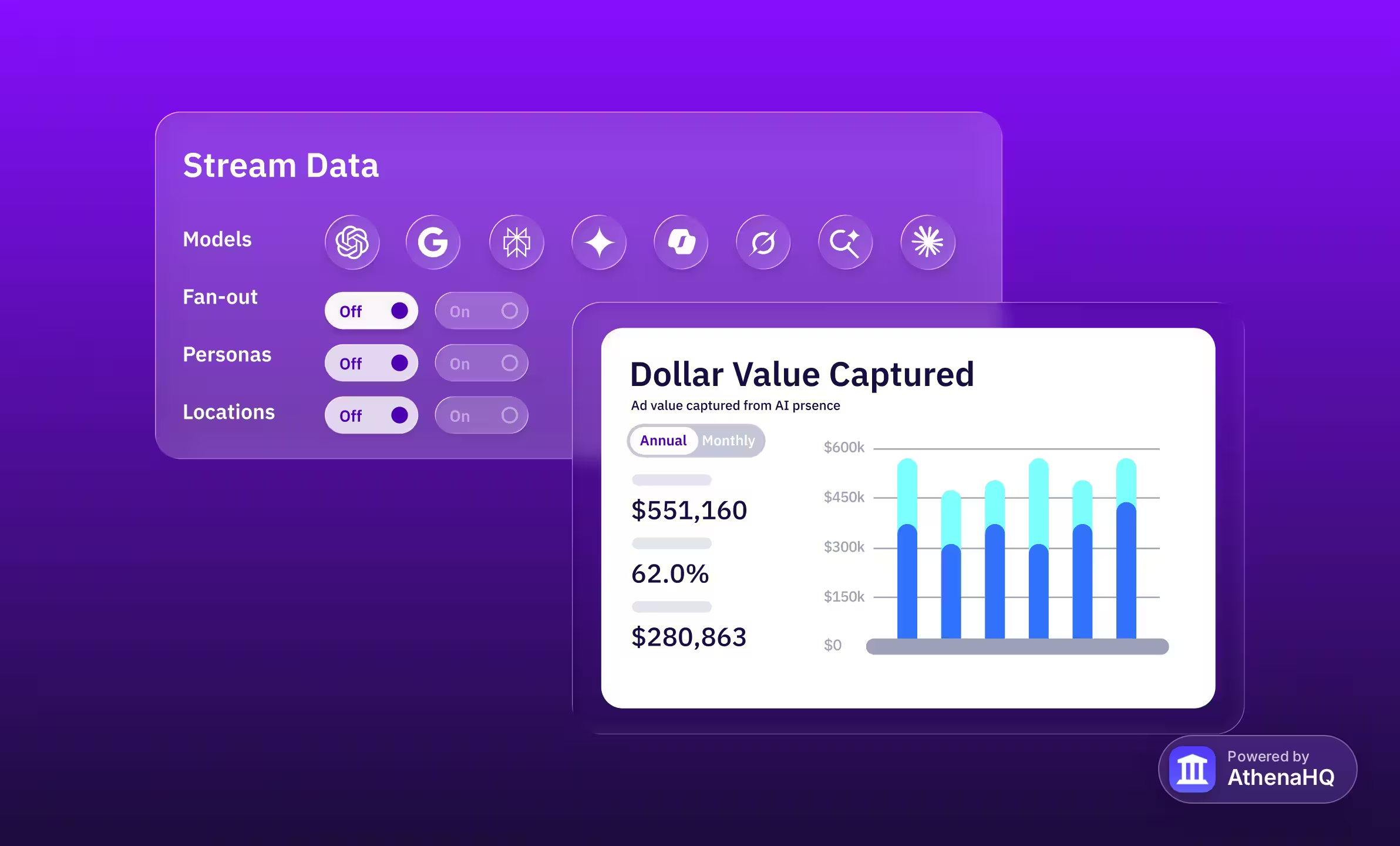
Turn AI visibility into measurable value
Deploy at scale—and measure what matters.
- Native CMS publishing: Push AI-optimized content straight to your site. Connects to Shopify, WordPress, Webflow, and more.
- Board-ready ROI: Skip the manual stitching. Translate AI visibility into 'Dollar Value Captured' with automated reporting.
- Automated intelligence: Get custom performance reports delivered to your inbox or Slack on the cadence you choose.
of brands are missing from AI conversations

AI Model Coverage
All the models. One dashboard.
The AI landscape is fragmented. Different customers use different models, and each model has its own way of sourcing local recommendations. GEO Studio monitors all of them, so you never have a blind spot.

How It Works
From invisible to unmissable in four steps
Connect your locations
Import your location data from any source — CRM, spreadsheet, or directly from your existing listings. GEO Studio maps every location automatically.
Audit your AI presence
Our system runs thousands of AI queries across all major models to establish your baseline visibility, citation rates, and competitive position.
Get your action plan
Receive prioritized, location-level recommendations — what to update, what to add, and what to remove — to maximize AI citation likelihood.
Watch your score rise
Apply recommendations in one click, then track your AI Visibility Score improve in real time. Weekly reports keep stakeholders aligned and accountable.
Frequently asked questions
The best AI search monitoring and optimization tools must offer real-time tracking, multi-engine coverage, and sentiment analysis. The industry standard includes:
- GEO Studio: Best for full-scale corporate visibility tracking, automated alert workflows, and revenue mapping.
- Yext Scout (Basic Discovery Scanners): Helpful for high-level, first-generation tracking of how a brand appears inside conversational search interfaces. However, it operates primarily as a passive analytics dashboard; it lacks the automated remediation workflows, technical crawler governance, and native publishing tools required to instantly fix the information gaps it uncovers.
- Semrush / Ahrefs (Legacy SEO Monitoring): The industry standard for traditional "blue link" search tracking, keyword volumes, and backlink audits. Because these legacy tools were built for traditional search engine algorithms, they remain functionally blind to conversational AI interfaces, multi-LLM Share of Voice (SoV), and real-time LLM hallucinations.
AI engines don't rank blue links; they synthesize facts. To win their recommendations at scale, you must optimize your digital footprint using GEO Studio's unified, execution-driven framework:
- Deploy AI-Ready Website Setup: Automatically build and deploy optimized llms.txt and robots.txt architectures directly to your site's root directory, giving AI scrapers a clean, structured map to index your most valuable data.
- Execute Semantic Structure Scanning: Use automated audits to instantly reformat on-page text into the highly scannable tables, bullet points, and Q&A blocks that LLM algorithms actively seek out and prioritize.
- Leverage Sources Visualization & Tracking: Utilize intuitive Sankey data-flow charts to trace exactly which third-party domains are driving AI mentions for your competitors, allowing you to instantly close critical content gaps.
- Activate AI-Driven Social Listening: Monitor high-authority external sources (like Reddit, YouTube, TikTok, and LinkedIn) that AI models use as “textbooks” to form brand opinions, showing your team exactly which public conversation threads they need to proactively join.
Tracking AEO cannot be done with standard ranking tables. To track it accurately at scale, look for platforms that feature:
- Conversational Prompt Auditing: The ability to input natural language queries and intent strings rather than just static keywords.
- Multi-LLM Share of Voice (SoV) Analytics: Dashboards that calculate the exact percentage of times your brand is recommended across thousands of automated, randomized user prompts.
- Trait Distribution Modeling: Software that quantifies the specific adjectives and traits (positive, neutral, negative) the AI associates with your brand name.
A comprehensive GEO audit requires a three-step workflow fueled by these specific data features:
- Prompt Assessment Testing: Run your primary buyer queries through an automated multi-engine scanning tool to establish your baseline Share of Voice.
- Technical Compliance Checks: Use a crawler governance feature to see if your site is currently blocking or cleanly welcoming AI scrapers via an optimized llms.txt architecture.
- Citation Funnel Tracing: Run a data-flow visualization audit to map your competitors' winning recommendations back to their third-party sources, revealing the exact domain gaps you need to close.
When evaluating a Generative Engine Optimization platform, look for these four non-negotiable enterprise capabilities:
- Cross-Model Scanning Consistency: It must test your brand across all major public and corporate AI models at the same time, not just one or two.
- Root-Cause Gap Analysis: It shouldn't just tell you that you are losing traffic; it must pinpoint why you are losing a prompt and provide a clear layout or data fix.
- Native CMS Publishing Integration: Look for tools that feature direct, single-click connections to platforms like WordPress, Webflow, and Shopify so your team can deploy optimized content instantly without a developer backlog.
- Factual Discrepancy Alerting: The tool must have built-in machine-learning guardrails to flag whenever an AI output contradicts your verified corporate data.
Share of Voice (SoV) is predicted using the base prompts, though it's also bringing in semantically similar variants too. We empower our platform users to add as many prompts as they see fit to obtain the all-important holistic view of their brand. It's worth noting that this also applies to individual locations as well, whereby you can prepare prompts just for specific locations and ensure that you get a large enough sample breadth of search capabilities.
GEO Studio pricing is based on a usage-based credit model. You purchase a monthly credit package based on your usage needs. Credits are consumed as you use the platform. Unused credits roll over or can be banked. As your needs grow (more locations, more content, more analysis), you can add credits.
GEO Studio currently tracks visibility across eight major AI models:
- ChatGPT (OpenAI)
- Perplexity
- Google AI (Google AI Overviews)
- AI mode (Google AI mode)
- Gemini (Google)
- Claude (Anthropic)
- Copilot (Microsoft)
- Grok (xAI)
We are continuously adding new models as they emerge and gain market share. The platform is designed to scale as the AI search landscape evolves.
There are two ways you can produce content from the Action Center. One of the advantages of GEO Studio being part of the Uberall platform is that you can take the content created in the Action Center and publish it across all the key places that drive AI search visibility for your locations — for example, your Google listings, review responses, social media content, and local pages with FAQ content. You can also use this content directly on your website and blog articles.
AI engines don't rank blue links; they synthesize facts. To win their recommendations, you must optimize using tools that provide:
- Semantic Structure Scanning: Automated audits that tell you how to reformat on-page text into the clean tables, bullet points, and Q&A blocks that LLM scrapers prefer.
- AI-Ready File Deployment: The technical capability to launch and update an llms.txt file directly onto your website's root directory to guide AI scrapers.
- Off-Page Forum Seeding Analytics: Features that monitor high-authority external sources (like Reddit, YouTube, and TikTok) that AI engines use as "textbooks" to form recommendations, showing you exactly where to insert accurate brand data.
The best AI search monitoring and optimization tools must offer real-time tracking, multi-engine coverage, and sentiment analysis. The industry standard includes:
- GEO Studio: Best for full-scale corporate visibility tracking, automated alert workflows, and revenue mapping.
- Yext Scout (Basic Discovery Scanners): Helpful for high-level, first-generation tracking of how a brand appears inside conversational search interfaces. However, it operates primarily as a passive analytics dashboard; it lacks the automated remediation workflows, technical crawler governance, and native publishing tools required to instantly fix the information gaps it uncovers.
- Semrush / Ahrefs (Legacy SEO Monitoring): The industry standard for traditional "blue link" search tracking, keyword volumes, and backlink audits. Because these legacy tools were built for traditional search engine algorithms, they remain functionally blind to conversational AI interfaces, multi-LLM Share of Voice (SoV), and real-time LLM hallucinations.
AI engines don't rank blue links; they synthesize facts. To win their recommendations at scale, you must optimize your digital footprint using GEO Studio's unified, execution-driven framework:
- Deploy AI-Ready Website Setup: Automatically build and deploy optimized llms.txt and robots.txt architectures directly to your site's root directory, giving AI scrapers a clean, structured map to index your most valuable data.
- Execute Semantic Structure Scanning: Use automated audits to instantly reformat on-page text into the highly scannable tables, bullet points, and Q&A blocks that LLM algorithms actively seek out and prioritize.
- Leverage Sources Visualization & Tracking: Utilize intuitive Sankey data-flow charts to trace exactly which third-party domains are driving AI mentions for your competitors, allowing you to instantly close critical content gaps.
- Activate AI-Driven Social Listening: Monitor high-authority external sources (like Reddit, YouTube, TikTok, and LinkedIn) that AI models use as “textbooks” to form brand opinions, showing your team exactly which public conversation threads they need to proactively join.
Tracking AEO cannot be done with standard ranking tables. To track it accurately at scale, look for platforms that feature:
- Conversational Prompt Auditing: The ability to input natural language queries and intent strings rather than just static keywords.
- Multi-LLM Share of Voice (SoV) Analytics: Dashboards that calculate the exact percentage of times your brand is recommended across thousands of automated, randomized user prompts.
- Trait Distribution Modeling: Software that quantifies the specific adjectives and traits (positive, neutral, negative) the AI associates with your brand name.
A comprehensive GEO audit requires a three-step workflow fueled by these specific data features:
- Prompt Assessment Testing: Run your primary buyer queries through an automated multi-engine scanning tool to establish your baseline Share of Voice.
- Technical Compliance Checks: Use a crawler governance feature to see if your site is currently blocking or cleanly welcoming AI scrapers via an optimized llms.txt architecture.
- Citation Funnel Tracing: Run a data-flow visualization audit to map your competitors' winning recommendations back to their third-party sources, revealing the exact domain gaps you need to close.
When evaluating a Generative Engine Optimization platform, look for these four non-negotiable enterprise capabilities:
- Cross-Model Scanning Consistency: It must test your brand across all major public and corporate AI models at the same time, not just one or two.
- Root-Cause Gap Analysis: It shouldn't just tell you that you are losing traffic; it must pinpoint why you are losing a prompt and provide a clear layout or data fix.
- Native CMS Publishing Integration: Look for tools that feature direct, single-click connections to platforms like WordPress, Webflow, and Shopify so your team can deploy optimized content instantly without a developer backlog.
- Factual Discrepancy Alerting: The tool must have built-in machine-learning guardrails to flag whenever an AI output contradicts your verified corporate data.
Share of Voice (SoV) is predicted using the base prompts, though it's also bringing in semantically similar variants too. We empower our platform users to add as many prompts as they see fit to obtain the all-important holistic view of their brand. It's worth noting that this also applies to individual locations as well, whereby you can prepare prompts just for specific locations and ensure that you get a large enough sample breadth of search capabilities.
GEO Studio pricing is based on a usage-based credit model. You purchase a monthly credit package based on your usage needs. Credits are consumed as you use the platform. Unused credits roll over or can be banked. As your needs grow (more locations, more content, more analysis), you can add credits.
GEO Studio currently tracks visibility across eight major AI models:
- ChatGPT (OpenAI)
- Perplexity
- Google AI (Google AI Overviews)
- AI mode (Google AI mode)
- Gemini (Google)
- Claude (Anthropic)
- Copilot (Microsoft)
- Grok (xAI)
We are continuously adding new models as they emerge and gain market share. The platform is designed to scale as the AI search landscape evolves.
There are two ways you can produce content from the Action Center. One of the advantages of GEO Studio being part of the Uberall platform is that you can take the content created in the Action Center and publish it across all the key places that drive AI search visibility for your locations — for example, your Google listings, review responses, social media content, and local pages with FAQ content. You can also use this content directly on your website and blog articles.
AI engines don't rank blue links; they synthesize facts. To win their recommendations, you must optimize using tools that provide:
- Semantic Structure Scanning: Automated audits that tell you how to reformat on-page text into the clean tables, bullet points, and Q&A blocks that LLM scrapers prefer.
- AI-Ready File Deployment: The technical capability to launch and update an llms.txt file directly onto your website's root directory to guide AI scrapers.
- Off-Page Forum Seeding Analytics: Features that monitor high-authority external sources (like Reddit, YouTube, and TikTok) that AI engines use as "textbooks" to form recommendations, showing you exactly where to insert accurate brand data.